Tuesday, August 25, 2026
Home Blog Page 12

How to Build the Ultimate Home Basketball Court: Design, Costs, and Tips

0

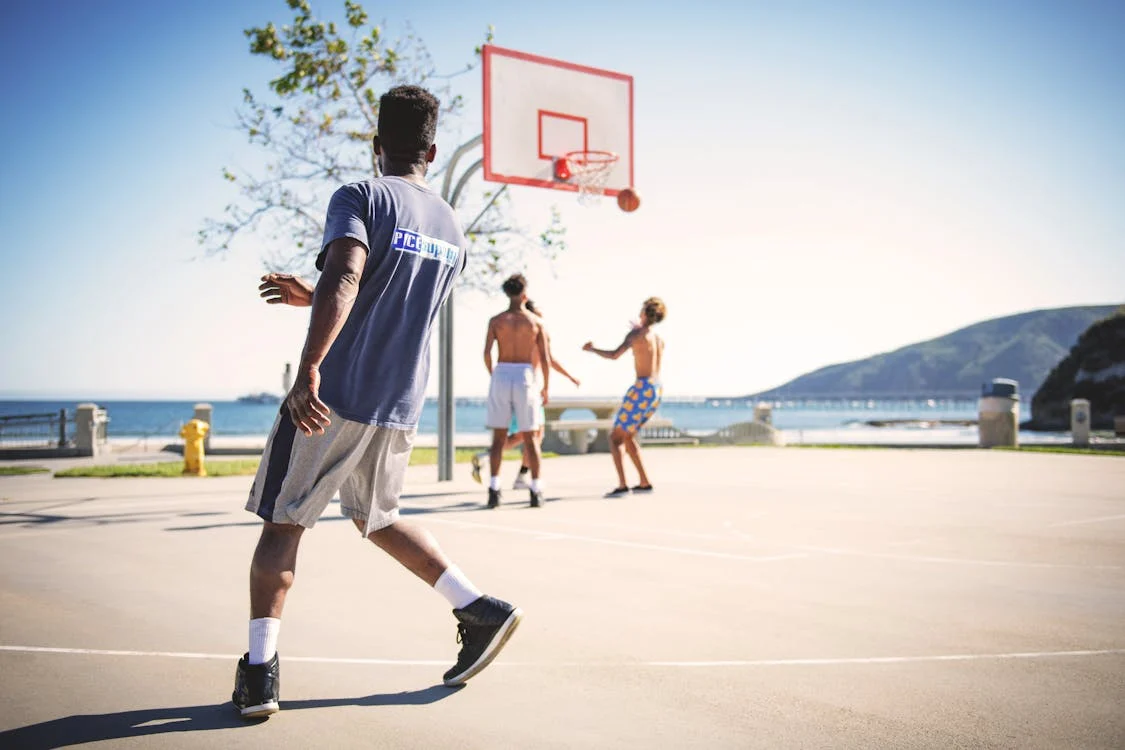
Many sports fans dream of building their home basketball court. It’s the ideal way to stay active, develop your game, and host a great event for family and friends. Whether you want a full-sized court or a tiny half-court, preparation is essential for success. Begin by selecting a location-indoor courts can be used all year, although outdoor courts are less expensive and mix well with outside surroundings. To ensure longevity and performance, use an appropriate surface material such as concrete, asphalt, or modular tiles. A quality basketball hoop, correct court markings, and extra additions like lights or fences will improve your playing experience. Nonslip surfaces and good drainage are also important considerations for building a safe environment.
How to Build the Ultimate Home Basketball Court: Design, Costs, and Tips

The cost of establishing a home basketball court is determined by criteria such as size, materials, and additional features. While DIY improvements might be cost-effective, professional installation ensures precision and durability, particularly for foundation and lighting. Budgeting correctly, prioritizing necessities over frills, and sourcing resources carefully will help you save money. Once your court is established, regular maintenance, such as cleaning and repairs, will maintain it in excellent condition for years to come. Personal embellishments, such as personalized colors or team logos, can make the court truly yours. With smart design and meticulous planning, your goal of the best home basketball court can become a reality, delivering endless hours of entertainment and exercise. “To learn more about the expenses involved, check out our detailed guide here: How Much Does It Cost to Build a Basketball Court?.”

Planning Your Basketball Court

Choosing a location
The first stage in constructing a basketball court is determining the best site. You will have to determine whether the court will be indoors or outdoors. Each solution has its merits and challenges.

Make sure your chosen location conforms with local zoning regulations. Check for setback restrictions and homeowner association guidelines, if any.

Court dimensions
Your basketball court’s dimensions are determined by the amount of space available. Here’s a basic breakdown.

  • Full-Sized Court: 94 by 50 feet (NBA standard).
  • Half-court: 47 by 50 feet.
  • Compact Court: Change the proportions to fit your space while keeping important lines intact.

If room is limited, prioritize important spots such as the free-throw line and three-point arc.

Surface preparation
A flat and solid surface is essential for a safe and fun court. Clear the ground of rubbish and make sure there is appropriate drainage. Compact the dirt and install a sturdy foundation, such as concrete or asphalt, for outdoor courts.

Designing Basketball Court: Surface Options

The court surface has a considerable impact on performance and durability. Here are the most popular alternatives:

  • Asphalt is inexpensive and resilient, but it cracks easily over time.
  • Concrete is durable and low-maintenance, although it is harsher on joints.
  • Wood is ideal for indoor courts because it provides outstanding traction and beauty while still requiring maintenance.
  • Modular Tiles: versatile, weather-resistant, and simple to install; available in a variety of colors and textures.

When choosing a surface material, consider your budget, climate, and maintenance requirements.

Marking the court

Accurate marks are necessary for a professional appearance. To mark the court lines, use durable paint or premade stencil kits. Concentrate on:

  • The free-throw line
  • 3-point arc
  • Key (painted region under the hoop)
  • Center circle (for full-size courts)

Essential equipment

A basketball court is incomplete without high-quality equipment. The key components include:

Basketball Hoop: Depending on your demands, you can choose between fixed, adjustable, and portable hoops.
Lighting: Install LED floodlights to properly illuminate the court during evening play.
Fencing to keep errant balls out, spectator seating, and equipment storage are all optional additions.

Cost Breakdown

Estimated cost for each component
There are several costs associated with the construction of a home basketball court. Here is a rough estimation:

Surface preparation:

  • Concrete or asphalt foundations cost $4 to $7 per square foot.
  • Modular tiles cost $3-5 per square foot.

Basketball Hoop

  • Basic models cost between $100 and $500.
  • Premium adjustable systems range from $1,000 to $5,000.

Additional Features:

  • Lighting costs between $500 and $2,000.
  • Fencing costs $10 to $20 per linear foot.
  • Custom paintings go from $300 to $800.

DIY vs. hiring professionals

DIY installation might be cost-effective, but it involves time, materials, and experience. If quality and durability are important, hire professionals for projects like as foundation pouring, electrical wiring, or custom design.

Budgeting tips
Prioritize the Essentials: Before you add extras like branding or chairs, focus on the basics.
Shop Smartly: Look for discounts, bulk offers, or refurbished equipment.
Plan for maintenance: Consider long-term upkeep costs when budgeting.

Practical Tips for an Excellent Experience

Safety Considerations

Safety is the most important consideration while designing a basketball court. Ensure:

  • Non-Slip Surfaces: To prevent slips, choose materials with strong traction.
  • cushioning: Install cushioning on walls, poles, and other hard surfaces near the court.
  • Proper Drainage: Ensure that water drains away from outdoor courts to avoid accumulating.

Maintenance Tip
Regular maintenance keeps your court in great shape. Outdoor courts should be swept, spills cleaned, and cracks repaired as soon as possible. For indoor courts, polish the surface on a regular basis and check for warping or damage.

Customizing your court
Personal touches might help to improve your basketball court. Consider:

  • Custom Colors: Use the colors of your favorite team or create your own palette.
  • Logos and graphics: Personalize the court by adding a team logo, initials, or a distinctive design.
  • For comfort and style, consider adding landscaping, seating areas, or a shaded pergola.

Frequently Asked Questions

1. How much does it cost to construct a home basketball court?
The price varies according to the size, materials, and additional amenities. A basic half-court can cost $10,000 to $20,000, and a full-sized professional court can cost $50,000 or more. Modular tiles, quality hoops, and unique features might raise the cost.

2. How big should a home basketball court be?
A full-sized court is 94×50 feet (NBA regulation), but most homes prefer a half-court, which measures 47×50 feet. For smaller locations, tailored proportions that prioritize crucial regions such as the free throw line and three-point arc are perfect.

3. Which surface is best for a basketball court?
Concrete, asphalt, modular tiles, and wood are examples of commonly used surfaces. Because of its endurance, concrete or modular tiles are commonly used for outdoor courts. Indoor courts usually have polished wood for greater traction and aesthetics.

4. What is the best way to maintain a basketball court?
The surface determines the maintenance requirements. Sweep trash, remove stains, and inspect for cracks and wear on a regular basis. Outdoor courts may need to be resealed every few years, whilst indoor courts must be polished and climate controlled to avoid warping.

5. Can I create a multi-sport court?
Yes, many homeowners create multi-purpose courts that include markings for other sports such as tennis, volleyball, and pickleball. Modular tiles are ideal for multi-sport application because of their versatility and durability.

6. What options do I have for customizing my basketball court?
Team logos, unique colors, LED lighting, sound systems, and fences are all available as customization choices. Smart hoop systems and digital scoreboards give a modern touch for tech-savvy fans.

7. Do I need authorization to construct a basketball court?
Permits may be required for construction under local zoning rules and HOA regulations, particularly for outdoor courts. Check with your local authorities to ensure you are in compliance.

8. Can I build a court on a sloping ground?
A solid foundation is essential for both safety and gameplay. If your property is sloped, you may require excavation or retaining walls to establish a level base.

9. What is a basketball court’s lifespan?
The longevity is determined by the materials and their care. Concrete courts can endure 20-30 years, modular tiles 10-15 years, and indoor wood courts several decades with good maintenance.

10. How do I make the court more kid-friendly?
Lower adjustable hoops, safety padding, and soft surface alternatives can help make the court more child-friendly. Adding enjoyable aspects such as bright graphics or games painted on the surface can further improve the experience.

A home basketball court is a worthwhile investment that provides exercise, entertainment, and family togetherness. Whether you choose a simple half-court or a lavish indoor setup, careful planning and design will ensure it suits your requirements and budget. Begin creating your dream court today and enjoy endless hours of basketball at home.

Share this information with others and get more sports-related tips and ideas on Quick News Feed!
8 Fun Basketball Games to Play with Friends

0


Basketball does not have to be an aggressive, high-energy five-on-five game with players rushing up and down the court. It does not have to be a solitary pastime, such as practicing your shots alone. Instead, it may be a pleasant blend of entertainment, laughter, and mild competitiveness, ideal for sharing with friends and family. Basketball’s beauty resides in its adaptability—sometimes all you need is a ball, a hoop, and a little imagination to turn the game into something unique.

We’ve developed a list of eight popular basketball games to help you get the most out of your sessions. Each has a distinctive twist that breathes new life into the traditional versions, assuring hours of fun and great memories with your loved ones. Whether you want to improve your skills or have fun, these games will surely provide. To get a comprehensive understanding of the factors influencing the cost of building a basketball court, including materials, size, location, and additional features, check out our in-depth guide on the subject of how-much-does-it-cost-to-build-a-basketball-court, designed to help you plan your project efficiently and budget effectively.

H-O-R-S-E

H-O-R-S-E is a classic and popular basketball game that is suitable for players of all abilities. The game begins with players taking turns shooting from whatever location on the court they want. Once a player makes a successful shot, the other players must attempt to repeat it from the same location and in the same manner. If a player misses the shot, they receive a letter from the word “HORSE.”

The game continues, with participants receiving letters for each missed shot. When a player accumulates all of the letters to spell “HORSE,” they are eliminated. This process continues until only one player remains, who is crowned the winner. Simple yet endlessly enjoyable, H-O-R-S-E is a terrific way.

How to Play: Each player takes turns attempting a shot. If the first player makes the shot, the other players must repeat it. If they miss, they will receive a letter from the word “HORSE.” The game continues until one participant has finished the word, at which time they are eliminated.

Tips for Increasing the Fun: Encourage players to be inventive with trick shots, such as shooting from behind the backboard or with one hand. This keeps the game lively and tests everyone’s skill level.

Why it is great: Horse is an excellent game for improving your shooting accuracy and testing out new shots.

knockout

This game usually begins at the free throw line, but you can start anywhere on the court to liven things up. Players form a single file, and the first person in line takes a shot to begin the game. As soon as the first player releases their shot, the second in line can take theirs.

The goal is simple: the second player must shoot before the first player can rebound and score. If the first player makes the shot, they throw the ball to the next person in line and go to the back of the line, keeping the game going. However, if the first player misses the shot, they must rebound and score.

If the second player makes a shot before the first player can score, the first player is eliminated. This elimination procedure continues until just one player survives and is proclaimed the winner. The game’s fast speed makes it fun, tough, and popular with groups of all skill levels.

How to Play: Players form a single-file line at the free throw line. The first two players each carry a basketball. The idea is to get your shot in before the person behind you does. If the second player takes their shot first, the first player is “knocked out.” The game lasts until one player remains.

Ideal Group Size: For a seamless rotation, play with 3-10 participants.

Why it is fun: The combination of speed, strategy, and pressure shooting keeps everyone on their toes. Furthermore, the rapid pace ensures that no one sits out for long.

 21 (or cutthroat)

The game begins with the first player dribbling out and attempting to score, while the other player(s) play as defenders, seeking to prevent any points from being scored. The offensive player has the option to take a shot at any time, and if they fail, they can go for the rebound and attempt again.

If the defensive player(s) secures the rebound, they must “clear” the ball by dribbling it beyond the three-point line before taking a shot. When the ball is cleared, the defensive player switches to offense and attempts to score. If the offensive player scores, the defensive player advances the ball beyond the three-point line to clear it and begin their offensive effort.

This back-and-forth continues until one player has 21 points and wins the game. Points are usually awarded as follows: one point for baskets made inside the three-point line and two points for shots made beyond it. If you want to add another level of difficulty, you can modify the scoring system to include three points for long-range shots.

The game’s mix of offensive, defense, and strategy makes it a thrilling and competitive approach to enhance individual talents while having fun.

How to Play: Each participant competes independently to score precisely 21 points. Points can be earned by shooting field goals or taking free throws, and you can also defend against other players to keep them from scoring. If a player gets beyond 21, his or her score resets to 13.

Pro tip: If a three-point line is available, use it to expand your scoring possibilities and strategy.

Why It’s Popular: The game’s intensity and competitiveness make it an excellent way to hone both offensive and defensive abilities.

Around the World

The goal of this game is to “travel around the world” by taking consecutive shots from specific positions on the court. Typically, the sequence begins with a layup, followed by a shot between the layup and the free throw line, then a free throw, and finally positions around the three-point arc.

You can set the rules ahead of time to accommodate varying skill levels. Players can either be required to make each shot in order to go on to the next position, or they can “bank” their progression. This means they can opt to halt their turn after taking a shot to prevent missing and losing their position, and then pass the round to the next player. This freedom creates the game enjoyable and challenging for players of all abilities.

How to Play: Players take turns shooting from predefined positions around the key or three-point arc. If a player makes a shot, they advance to the next position. If they miss, they can select “stay” or “risk” and retake the shot. Missing the risk shot sends them back to the beginning.

Creative Variations: To make the game more entertaining, add extra spots or trick shots.

Why It’s Beneficial: It’s a great opportunity to improve your shooting technique while competing in a friendly environment.

 King of the Court

King of the Court is the ultimate one-on-one battle that challenges your offensive and defensive skills.

How to Play: One player begins as the “king” and competes against challengers in a one-on-one match. The first player to score remains on the court while the challenger rotates out. The game continues until the player reaches a certain amount of wins.

Why Does It Stand Out: The one-on-one format encourages participants to improve their moves and defenses. It’s a terrific game for practicing ball control and scoring under duress.

Dribble Knockout

Dribble Knockout is a dynamic game that improves dribbling abilities and fast thinking.

How to Play: Each participant dribbles within a specific area, attempting to knock others’ basketballs out of bounds while protecting their own. Players who lose the ball are eliminated, and the last person to dribble wins.

How to Increase Difficulty: Reduce the play area gradually to make the game more demanding.

Why It’s Exciting: Dribble Knockout is a favorite among players of all ages because to its constant action and the need for quickness.

Shark and Minnow

Sharks and Minnows is a lively, high-energy game ideal for large parties.

How to Play: One or two players begin as “sharks” at midcourt, with the remainder as “minnows” at the baseline. The minnows must dribble to the opposing baseline without losing the ball to the shark. Players who lose their ball are transformed into sharks in the following round.

Fun twists: Make the game more difficult by adding obstacles or dribbling with only one hand.

Why It’s Fun: Sharks and Minnows is ideal for honing dribbling abilities under duress while also giving plenty of entertainment.

 Free-throw contest

A Free Throw Contest is basic yet competitive, concentrating on one of basketball’s most important abilities.

How to Play: Players take turns shooting free throws, with a predetermined amount of attempts per round. The player who made the most shots wins.

Why It is Worth Trying: It’s a low-intensity game that promotes focus and shooting technique while providing a break from more physically demanding activities.

Tips for an Awesome Basketball Game Session

To make your basketball game experience as joyful as possible, keep these things in mind:

Warm up properly: Begin with mild stretches and dribbling routines to prevent injuries and increase performance.

Challenges: To keep games interesting, add thematic challenges such as “weak hand only” or “no-look passes”.

Rotate Players: In larger groups, establish explicit rotation rules to guarantee that everyone has an opportunity to play.

FAQs: What People Ask About Fun Basketball Games

1. What fun basketball games are suitable for beginners?
Beginners might enjoy games such as Horse, Around the World, and Knockout. These games emphasize fundamental abilities such as shooting and dribbling while keeping the competition light and fun.

2. Can the basketball games be played indoors?
Yes, the majority of these games, including Free Throw Contest, King of the Court, and Dribble Knockout, may be played on indoor courts. Make sure the place is safe and open for movement.

3. What number of players are required for these games?
The number of players varies each game:

  • Horse: two or more players.
  • Knockout: 3-10 participants.
  • Sharks and Minnows: Larger groupings (5+ players) perform well.
  • 21: 3-5 players for a fair competition.

4. Can I play these games with only two players?
Yes! Games such as Horse, Around the World, and King of the Court are ideal for two players. They support pleasant one-on-one competitions.

5. What are some fun basketball games for children?
Kids enjoy lively games such as Sharks and Minnows, Knockout, and Dribble Knockout. These games are easy, fun, and help you develop basic basketball abilities.

6. How can I make basketball games more challenging?
Use trick shots or create new shooting areas in Horse and Around the World.
To make Dribble Knockout more challenging, shrink the play area.
Introduce time constraints or specific regulations to any game, such as weak-hand dribbling.

7. Are these games useful for honing basketball skills?
Absolutely! Each game emphasizes distinct aspects of basketball:

  • Horse and Around the World: Shooting precision and ingenuity.
  • Knockout: Ability to shoot quickly and under duress.
  • Dribble Knockout tests ball-handling and agility.
  • King of the Court: One-on-one attacking and defensive abilities.

8. How do I promote fair play during games?
Establish clear guidelines before beginning and stress sportsmanship. Rotate players frequently, especially in games featuring elimination rounds, to ensure that everyone gets an opportunity to play and enjoy.

Basketball provides limitless potential for enjoyment and interaction, especially when inventive games are played outside of the usual structure. These eight games, ranging from the accuracy of Horse to the agility of Dribble Knockout, cater to a wide range of skill and interest. So gather your pals, take the court, and try these entertaining basketball games. You’ll not only have a great time, but you’ll also improve your talents and bond with your teammates. Learn the official height of a basketball hoop and key details on how-high-is-a-basketball-hoop.

Visit quicknewsfeed.com to be motivated with more basketball tips, ideas, and fun articles!

Top Indoor Basketball Courts: Designs, Dimensions, and Setup Tips

0

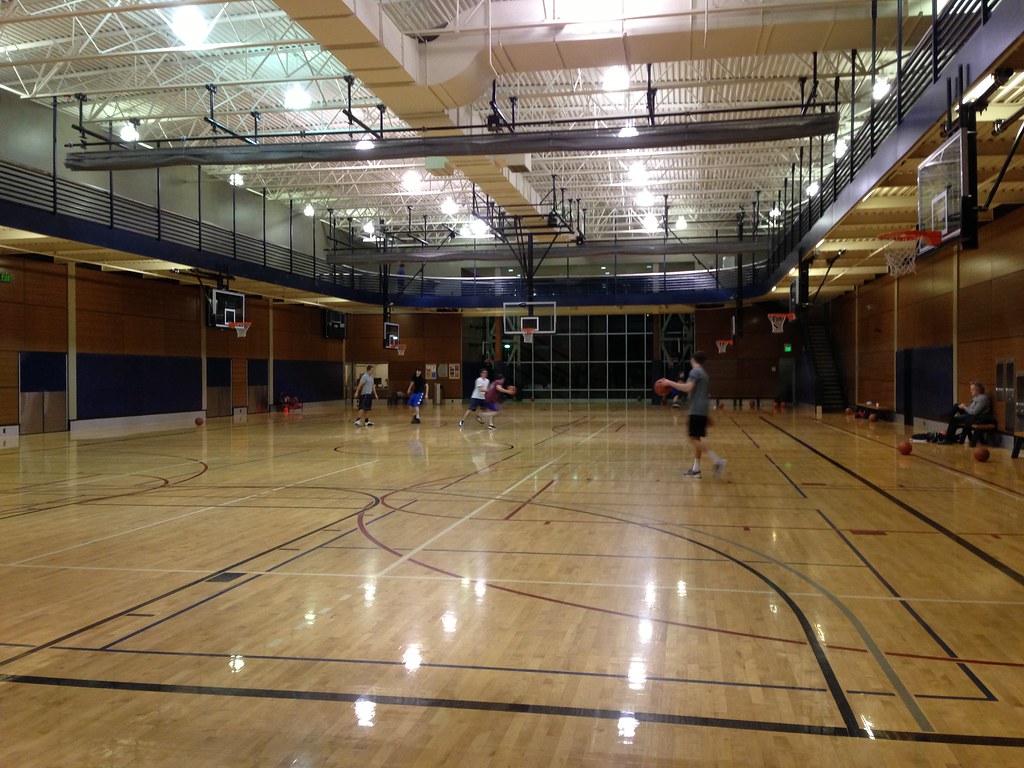
Indoor basketball courts are becoming increasingly popular in households, schools, and community centers. They offer a secure, regulated atmosphere for year-round play and training, making them popular among both amateurs and professionals. In this post, we’ll go over everything you need to know about indoor basketball courts, from conventional dimensions and designs to setup instructions and upkeep. I’d like to begin designing the ideal indoor court for your specific requirements.

Indoor basketball facilities have evolved drastically throughout time to meet the changing needs of players and viewers. Modern arenas now include cutting-edge features aimed to improve performance, safety, and overall pleasure. “Find out the answer to the question of how much does it costs to build a basketball court.

A History of Indoor Basketball

Indoor basketball originated in the late nineteenth century when Dr. James Naismith created the sport in Springfield, Massachusetts. Initially played in small YMCA gyms and school facilities, indoor basketball quickly gained popularity due to its flexibility in enclosed areas.

Top Indoor Basketball Courts: Designs, Dimensions, and Setup Tips

The venues evolved along with the game. What began with simple wooden flooring and few amenities evolved into modern sports facilities. Indoor facilities have evolved over the decades to include technologies such as synthetic flooring, advanced climate control systems, and LED lighting, resulting in world-class environments for both players and spectators.

Key characteristics of modern indoor basketball courts

1. Standardized dimensions
Modern indoor basketball courts follow tight criteria established by regulating bodies such as the FIBA and NBA. A full-size court is 94 feet long and 50 feet wide, assuring consistency for both professional and leisure play.

2. Specialized Flooring
Flooring is essential for safety and performance. Most indoor courts employ hardwood or synthetic materials that are designed to:

  • Ensure constant ball bounce.
  • Provide high traction to reduce slipping.
  • Reduce player fatigue by absorbing impacts.

3. Advanced lighting systems
Modern indoor basketball courts use high-quality lighting systems. These mechanisms ensure:

  • Even lighting throughout the court.
  • There is less glare, allowing for great visibility.
  • Increased player focus during fast-paced games.

4. Climate control
Temperature and humidity control systems ensure optimal playing conditions for players while also preserving the flooring from moisture damage.

Indoor Basketball Equipment You Must Have

Indoor basketball necessitates a variety of specialised equipment to improve the gameplay experience and assure safety:

1. Basketballs
Indoor basketballs are often composed of leather or high-quality composite materials, providing better grip and durability than their outdoor counterparts.

2. Hoop and Backboard
Hoops are fixed at a standard height of 10 feet.
Backboards are constructed of tempered glass or tough acrylic to endure rough play and many dunks.

3. Player Gear
Players wear specialist footwear intended for indoor courts, which provides superior grip and cushioning. Knee pads, ankle braces, and compression garments are examples of additional items that aid in injury prevention and performance improvement.

Advanced Lighting Systems: The Unsung Hero

When you walk into a modern indoor basketball arena, you can’t help but notice how new lighting systems affect the atmosphere. LED illumination has transformed indoor courts, providing a blend of usefulness, aesthetics, and efficiency.

Functionality and performance
The LED lights are precisely adjusted to:

  • Reduce glare and shadows.
  • Each action on the court should be highlighted precisely.
  • Provide steady illumination, which improves player performance and audience enjoyment.

Aesthetics and immersion
Beyond functionality, LED lighting creates an immersive ambiance. Dynamic lighting effects can improve pre-game presentations or highlight critical events during a game, leaving spectators with an unforgettable experience.

Energy Efficiency
LED lighting is not just about performance; it is also a proponent of sustainability. LED solutions lessen environmental impact while lowering operating costs because they use less energy and have longer lifespans.

Indoor Basketball Court Rules and Regulations

While the fundamental rules of basketball are the same whether indoors or outside, various laws related to indoor basketball assure player safety and fair competition. Because of the controlled atmosphere they provide, indoor courts often have stricter standards for court borders, foul limits, and equipment usage.

Differences Between Indoor and Outdoor Basketball: Environmental Factors Indoor basketball eliminates external variables such as wind, rain, and uneven terrain that might interfere with outdoor play. This provides a level playing field and predictable conditions.
Indoor courts have well-defined boundaries that are unobstructed by exterior obstructions, allowing for uninterrupted gameplay.
Equipment Standards: Indoor hoops, backboards, and flooring fulfill established professional play specifications, resulting in consistent performance.
Indoor courts remove the variability produced by outdoor circumstances, allowing players to concentrate solely on their strategies, execution, and teamwork.

The advantages of playing basketball indoors

Indoor basketball has various benefits, making it a popular choice for players of all ability levels.

1. Controlled Environment
Indoor courts are resistant to weather disturbances, allowing for year-round play. Players may train consistently without being concerned about rain, wind, or harsh temperatures.

2. Improved amenities
Indoor facilities commonly include:

  • Locker rooms for players.
  • Fans can sit in the spectator seats.
  • Concession stands and bathrooms are provided for convenience.

These aspects help to provide a professional and comfortable environment for both players and attendees.

3. Safety and comfort
The climate-controlled environment creates ideal playing conditions. With no uneven terrain or exposure to severe elements, the chance of injury is reduced, allowing athletes to perform to their full potential.

4. Community appeal
Indoor courts are about more than simply the game; they’re about building relationships. These places frequently hold activities and events that bring people together, strengthening community ties.

Community involvement and outreach

Indoor basketball courts are an important part of community development. Aside from hosting professional games, they are bustling engagement centers, with programs and events that promote healthy lifestyles, youth development, and social inclusion.

1. Leagues for Youth Basketball
Indoor courts serve as a venue for young leagues and competitions, fostering talent and imparting vital life skills like:

  • Teamwork.
  • Discipline.
  • Sportsmanship.

These projects help to develop the next generation of athletes while teaching lasting values.

2. Skill-development clinics
Professional athletes and coaches frequently hold clinics and workshops in indoor facilities. These seminars focus on:

  • Shooting tactics.
  • There are defensive strategies.
  • Overall basketball intelligence.

Experienced professionals motivate new sportsmen to improve their skills by sharing their knowledge.

3. Community Activities and Fundraisers
Indoor arenas regularly host:

  • Basketball games held for charity.
  • Local fundraisers.
  • Cultural festivities.

Such gatherings promote togetherness and bring disparate groups together, instilling a sense of belonging and supporting key efforts.

4. Basketball Camps and Academies
Elite camps and academies flourish in indoor surroundings, providing intensive programs that prepare players for competitive basketball. These camps commonly provide:

  • Outstanding coaching.
  • Access to cutting-edge facilities.
  • Opportunities for competitive match-ups.

Participants develop the skills, discipline, and exposure required to achieve at higher levels of play.

Why Choose an Indoor Basketball Court?

Indoor basketball courts have many advantages, including:

  • Weather Protection: Indoor courts, as opposed to outdoor courts, protect players from rain, snow, and extreme heat, allowing for continuous play.
  • Indoor courts have smooth surfaces and are regulated conditions, which reduces the chance of injury.
  • Year-Round Accessibility: An indoor court allows players to practice and play year-round.

Standard Dimensions and Specifications

Understanding the dimensions and needs of an indoor basketball court is critical for effective planning.

1. Official dimensions
NBA: A regular NBA court is 94 feet long and 50 feet wide, with a 3-point line 23.75 feet from the basket.
FIBA: International courts are slightly smaller, measuring 91.86 feet by 49.21 feet with a 3-point line at 22.15 feet.
High school: These courts are 84 feet by 50 feet, making them perfect for smaller areas.
Half-Court: A suitable solution for personal usage, measuring 42 feet by 50 feet, depending on available space.

2. Ceiling Height
The optimum ceiling height is 16-20 feet, which provides enough space for high shots and rebounds.

3. Court markings
Free-throw line is 15 feet from the backboard.
Key (or paint) measures 16 feet broad (NBA) or 12 feet wide (FIBA).
The center circle measures 12 feet in diameter.

Top Indoor Basketball Court Designs

Your indoor court will be designed based on your needs, budget, and available space. Here are a few popular options:

1. Luxury Homes Courts
Luxury courts use high-quality materials such as polished hardwood floors, LED lighting, and customised logos. Some models feature retractable hoops, integrated music systems, and climate control for enhanced comfort.

2. Commercial and community centers
These courts are built to last and often feature synthetic flooring to endure severe use. The seating configurations, scoreboards, and locker facilities make them suitable for tournaments and leagues.

3. Smaller Personal Courts
Compact courts are ideal for families with limited space. They frequently contain folding hoops, wall-mounted equipment, and multifunctional flooring that may be used for other purposes.

4. Multipurpose Courts
Adjustable netting and flooring systems allow these adaptable courts to handle basketball, volleyball, or badminton.

Important Tips for Setup

Establishing an indoor basketball court necessitates careful consideration of several factors:

1. Flooring options
The floor is the cornerstone of your court, influencing playability, safety, and longevity.

Hardwood: The professional standard, with superb bounce and looks.
Synthetic: Long-lasting and low-maintenance, ideal for community centers.
Rubberized: Offers extra cushioning, making it suitable for young players.

2. Light and Ventilation
Use LED lights to provide strong, even illumination with no glare.
Proper ventilation or air conditioning is essential for player comfort and moisture management.

3. Wall Pads and Safety Features
Install wall cushioning to reduce the chance of injury during fast-paced games.

4. Hoop and Equipment
Choose adjustable hoops to suit players of all ages.
For optimal performance, invest in high-quality tempered glass or acrylic backboards.

5. Acoustics Soundproofing materials can reduce noise levels, particularly in residential environments.

FAQs about indoor basketball courts

1. What is the size of an indoor basketball court?
A conventional indoor basketball court is 94 feet long and 50 feet wide, according to NBA and FIBA specifications. High school courts may be slightly smaller, measuring 84 feet by 50 feet.

2. What type of flooring is utilized on indoor basketball courts?
Most indoor basketball courts include hardwood flooring, notably maple wood, which is noted for its durability and steady ball bounce. Some courts may use synthetic surfaces to save money and serve many purposes.

3. What lighting methods are used on indoor basketball courts?
Indoor basketball courts use LED lighting systems to save energy, reduce glare, and provide uniform illumination, ensuring excellent sight for players and spectators.

4. What are the differences between indoor and outdoor basketball courts?
Indoor courts include polished hardwood or synthetic floors, whilst outdoor courts are built of concrete or asphalt.
Indoor courts provide controlled settings without weather disturbance. Outdoor courts are subject to elements such as wind, rain, and uneven terrain.
Indoor equipment is held to tight standards, ensuring consistent performance, whereas outdoor hoops and basketballs are built to resist harsh conditions.

5. Can indoor basketball courts accommodate other sports?
Yes, many indoor courts are multipurpose and can accommodate activities such as volleyball, badminton, and futsal. Synthetic flooring is commonly utilized in such facilities to support a variety of activities.

6. What is the cost of building an indoor basketball court?
The price varies depending on the size, materials, and additional amenities. On average:

  • A basic indoor court may cost $50,000 to $100,000.
  • A professional-grade court with enhanced lighting, seats, and amenities can cost over $200,000.

Indoor basketball courts are more than just playing surfaces; they are important centers for sports, community, and personal development. Indoor courts, which have strong rules and regulations in place to ensure fair play and safety, are excellent for players to hone their skills and enjoy the game.

Furthermore, these institutions contribute to community participation through youth programs, skill clinics, and cultural events. Whether you’re a beginner or a seasoned pro, indoor basketball has a wide range of benefits that enrich lives and communities.

What’s your dream indoor basketball court design? Share your ideas or favorite examples in the comments below! “Visit Quick News Feed for the latest updates, tips, and insights on sports, lifestyle, and more!”

Diagrams of Basketball Courts: Complete Guide with Dimensions and Layouts

0


Basketball courts are more than just playing surfaces; they are meticulously constructed venues that influence the game’s structure and flow. Every line, marker, and size on the basketball court diagram serves a purpose and influences games, strategy, and how players approach each time on the court. Every feature, from the three-point arc that tests shooters to the key that tests post-players, is essential to create dynamic and competitive action. Understanding these facts benefits not just the athletes, but also the coaches, officials, and fans.

Basketball court diagrams: Complete Guide with Dimensions and Layouts

Whether you’re polishing your jump shot, formulating a defensive game strategy, or guaranteeing fair play as an official, understanding basketball court layouts is crucial. The court’s design promotes teamwork, sharpens skills, and allows for tactical brilliance. This book delves into every aspect of basketball court diagrams, providing insights into their components, dimensions, and variances across different levels of play, allowing you to develop a deeper understanding of the game.

To learn more about the costs involved in constructing a basketball court, visit our detailed guide: How Much Does It Cost to Build a Basketball Court?. This resource will allow you to develop a deeper understanding of the game. . Additionally, if you’re curious about the standard height of a basketball hoop and how it impacts gameplay, check out our article: How High Is a Basketball Hoop?. These resources will help you develop a deeper understanding of the game.

An Overview of a Basketball Court

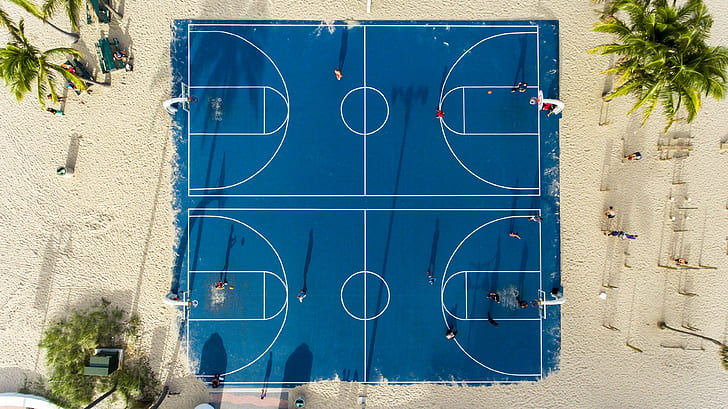
A basketball court is a rectangular area where the game is played. It is divided into two parts, each with a basket in the center and fixed on a backboard. The court has a variety of markers and regions that govern gameplay, including the free-throw line, three-point arc, and key.

Basic Elements of a Basketball Court:

Court Dimensions:

  • Center Circle
  • Three-Point Line Key (Paint Area)
  • Free-throw lines
  • Sidelines and baselines
  • Basket and Backboard
  • Restricted Area Arc

Basketball Court Dimensions

NBA Court Dimensions

The National Basketball Association (NBA) courts are larger than the majority of other courts. They have measurements tailored to professional play.

  • Court Size: 94 feet long (28.65 meters) and 50 feet broad (15.24 meters).
  • Center Circle: 12 feet (3.66 meters) in diameter.
  • Three-point line:
  • Arc radius: measures 23.75 feet (7.24 meters) from the basket’s center.
  • Corner distance: 22 feet (6.7 meters) from the basket.
  • Free-Throw Line: 15 feet (4.57 metres) from the backboard.
  • Dimensions: 16 feet (4.88 meters) broad by 19 feet (5.8 meters) long.
  • Basket Height: The rim is 10 feet (3.05 metres) above the court.

FIBA court dimensions

The International Basketball Federation (FIBA) controls basketball on a global scale, and its courts are slightly smaller than NBA courts.

  • Court Size:  91.86 feet (28 meters) long and 49.21 feet broad (15 meters).
  • Center circle: 11.81 feet (3.6 meters) in diameter.
  • Three-Point Line:
  • Arc radius measures 22.15 feet (6.75 meters) from the basket’s center.
  • Corner distance: 21.65 feet (6.6 meters).
  • Free-throw line: 15.09 feet (4.6 meters) from the backboard.
  • Key dimensions: 16.08 feet (4.9 meters) broad.
  • Basket height: 10 feet (3.05 meters)

Dimensions of High School Basketball Courts

In the United States, high school basketball courts are designed with precise proportions to accommodate younger players.

  • Court dimensions are 84 feet (25.6 meters) long and 50 feet (15.24 meters) broad.
  • Center Circle: 12 feet (3.66 meters) in diameter.
  • Three-point line:
  • Arc radius measures 19.75 feet (6.02 meters).
  • Free-Throw Line: 15 feet (4.57 metres) from the backboard.
  • Key dimensions: 12 feet (3.66 meters) broad.

College Basketball Court Dimensions:

NCAA courts differ slightly from professional ones, including characteristics of high school and NBA courts.

  • Court dimensions: 94 feet (28.65 meters) long and 50 feet (15.24 meters) broad.
  • The center circle measures 12 feet (3.66 meters) in diameter.
  • Three-point Line:
  • Arc radius: 22.15 feet (6.75 metres).
  • The free-throw line is 15 feet (4.57 meters) from the backboard.
  • Key dimensions are 12 feet (3.66 meters) broad.

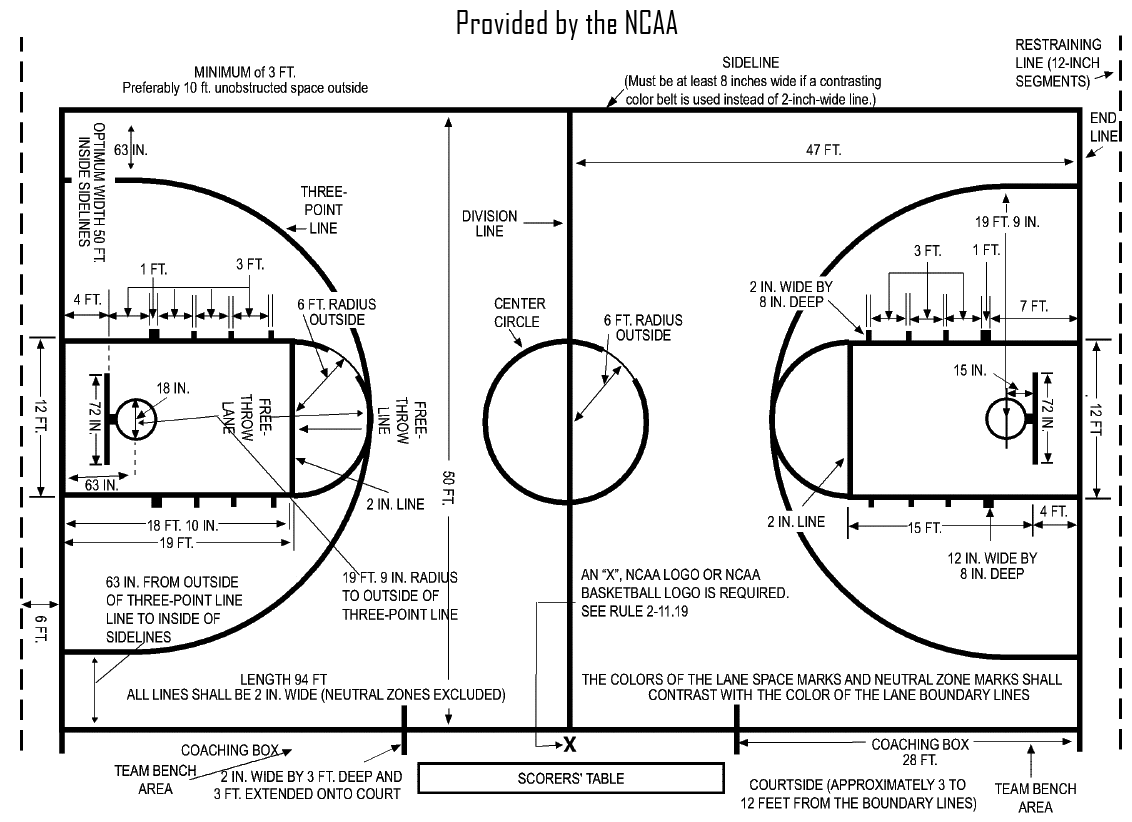
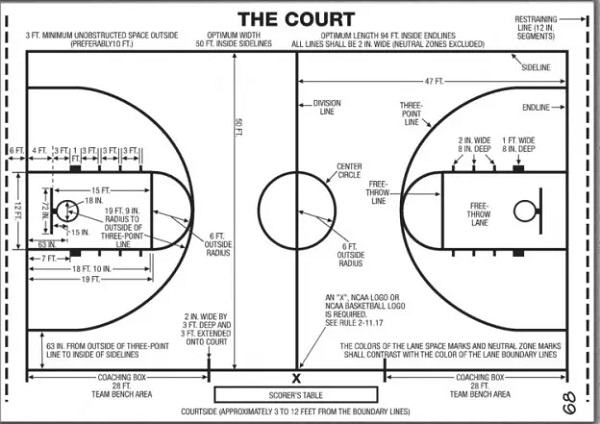
Diagrams of basketball courts

  •  NBA Full Basketball Court

basketball court diagram: Complete Guide with Dimensions and Layouts
Basketball_-_NBA_-_field_diagram_-en.svg
  •  International Full Basketball Court

basketball court diagram: Complete Guide with Dimensions and Layouts
Basketball_-_FIBA_-_field_diagram_-en.svg
  •  College Basketball Court

Basketball court diagram: Complete Guide with Dimensions and Layouts

  • High School Basketball Court
basketball court diagram: Complete Guide with Dimensions and Layouts
high-school-basketball-court-dimensions-scottfujita-1
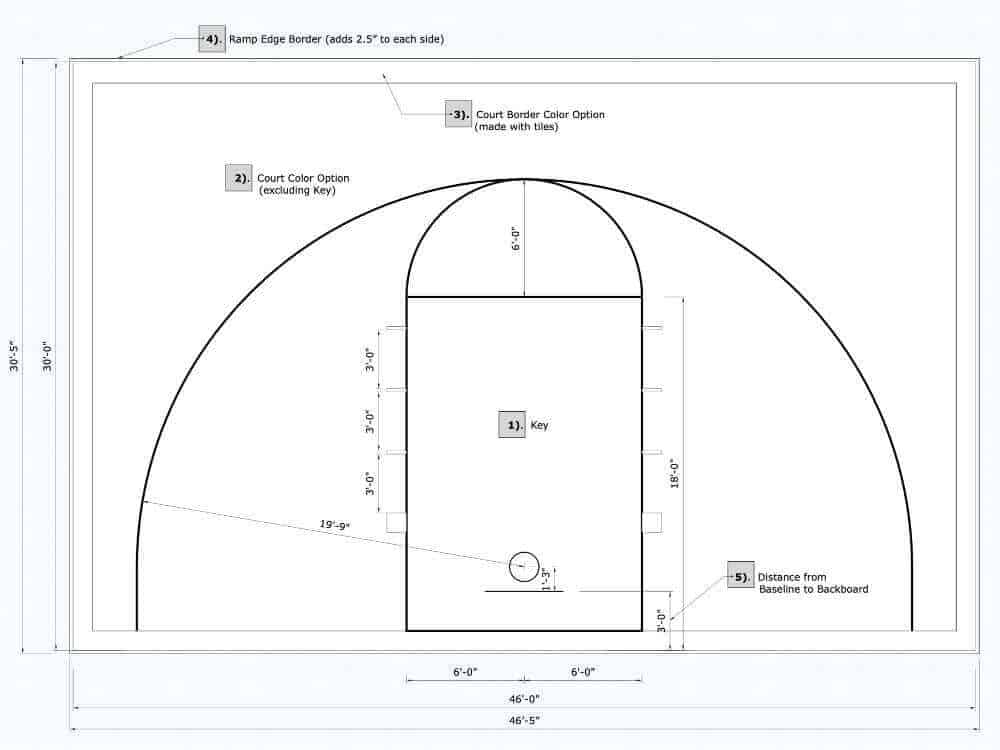
  •  Basketball Half Court

Basketball court diagram: Complete Guide with Dimensions and Layouts
46×30-basketball-half-court-plan-drawing

The following are thorough descriptions of the main parts of a basketball court, along with their purposes.

1. The Central Circle
The game begins with a tip-off from the center circle. The circle’s circumference varies slightly depending on the regulating organization.

NBA: 12 feet (3.66 metres)
FIBA: 11.81 feet (3.6 m)
The tip-off occurs in the center circle, where the referee throws the ball up and players jump to gain possession.

2. The Three Point Line
The three-point line goes around the basket. Any shot taken beyond this line earns three points. The distance between the line and the basket varies.

NBA: 23.75 feet (7.24 meters) at the arc and 22 feet (6.7 meters) at the corners.
FIBA: The arc is 22.15 feet (6.75 meters) long, and the corners are 21.65 feet (6.6 meters).
High school: 19.75 feet (6.02 meters).

3. The Key (Paint Area)
The rectangular region beneath the basket is where the key, often known as “the paint,” is located. This zone is vital for offensive and defensive plays since it is extensively monitored.

NBA dimensions: 16 feet wide.
FIBA dimensions: 16.08 feet wide.
High School is 12 feet wide.

4. The free throw line
Following a foul, players shoot unchallenged at the free-throw line. Most standards specify 15 feet from the backboard. The line is a primary focus in both practice and games.

5. Restricted Area Arc
The restricted area arc is a semi-circle situated beneath the basket. Defensive players within this arc cannot draw charging fouls.

NBA: 4 feet (1.22 meters) radius.
FIBA: Similar measurements.

6. Sideline and Baseline
The sidelines mark the court’s length, while the baselines mark its breadth. These limits define the play area:

NBA: 94 feet by 50 ft.
FIBA dimensions: 91.86 feet by 49.21 feet.
High School is 84 feet by 50 feet.

Specialized Court Markings

Half Court Line
The half-court line separates the court into two equal parts. In the NBA, teams must advance the ball past this line in eight seconds, but in high school and college, they must do so in 10.

Team Bench and Scorers’ Table
The sides around the center court frequently house team benches and the scorers’ table, where timekeepers and officials oversee the game.

Outdoor and recreational basketball courts

While professional courts have strict dimensions, outdoor and recreational courts may differ:

  • Court sizes can range from half-courts to full-courts, depending on available space.
  • Materials: Outdoor courts are often composed of asphalt or concrete.
  • Customizations: Some recreational courts have unique color schemes or additional lines for different sports.

Common Questions About Basketball Court Layouts

1. What is the key’s purpose?
The key acts as a limited zone for players, restricting their time within to prevent penalties. It promotes fair play near the basket.

2. Why do three-point lines vary in length?
Three-point lines are changed to reflect player skill levels and the game’s regulatory body. Professional leagues, like as the NBA, have longer fields than high school courts.

3. What’s the difference between backboards and baskets?
All leagues use the same dimensions for backboards (6 feet wide and 3.5 feet tall) and baskets (18 inches in diameter). However, the materials used for outdoor courts may differ.

4. What is the length of the three-point line?
The distance between the three-point line varies by league:

NBA: 23.75 feet at the arc, 22 feet in the corners.
FIBA dimensions: 22.15 feet at the arc, 21.65 feet at the corners.
High school height is 19.75 feet.

5. What is the limited area’s arc?
The restricted area arc is a semi-circle beneath the hoop where defensive players are unable to draw charging fouls. The NBA and FIBA use a radius of four feet.

6. Why do court sizes vary among leagues?
Court sizes are changed to match the skill level and physical abilities of the players. Professional leagues such as the NBA use wider courts to allow faster-paced action.

7. What materials are utilized in basketball courts?
Indoor courts are often made of hardwood, whilst outdoor courts are often composed of asphalt or concrete to provide durability.

8. How much does it cost to construct a basketball court?
The cost varies according to size, material, and location. A regular full-size court can cost anything from $20,000 to over $100,000.

How to build a basketball court

Building a basketball court takes careful design and execution. Key considerations include:

  • Space Requirements: Allow enough room for the specified court size.
  • Surface Materials: You can choose between hardwood, asphalt, or concrete.
  • Court markings: To ensure exact lines, use the right paint or tape.
  • Hoop Installation: Secure the hoop and backboard to fulfill height requirements.

To summarize, the design and layout of a basketball court are critical to the game, influencing how players, coaches, and officials approach all aspects of play. The precise measurements of the three-point line, as well as the uniformity of rim height, maintain justice and consistency while increasing the sport’s excitement and competition.

Understanding the components and measurements of basketball courts throughout leagues helps you appreciate the delicate mix of skill, strategy, and organization. Whether you’re on the court, evaluating a game, or expanding your knowledge as a fan, understanding the basketball court layout is critical to fully participating with this worldwide popular sport. For more informative articles and updates on a wide range of topics, explore our website: QuickNewsFeed.

How much does it cost to build a tennis court?

0


Tennis is more than simply a game; it’s a lifestyle. This globally popular racket sport has a deep history and continues to captivate hearts worldwide. Tennis is special in Europe, particularly in the United Kingdom, where lawn tennis originated in the 1800s. Wimbledon is still a symbol of British culture and a highlight of the international athletic calendar. Discover how many sets are played in tennis with this complete guide.

How much does it cost to build a tennis court?
stadium-tennis-court-tennis-a333c3-1024

However, while tennis appeals to people of all ages and skill levels, finding a good court is not always easy. Building a court can be a game changer if you love tennis and have the funds. How much does it cost to create a tennis court?

How much does it cost to build a tennis court?

How much does it cost to build a tennis court?

The good news is that it may be more economical than you realize. For example, an outdoor swimming pool may cost £85,000 on average, whilst a tennis court costs roughly £45,000. Of course, this figure changes depending on the surface type, location, and other characteristics.

This guide will lead you through the expenses, surface alternatives, and factors to consider when deciding whether to build a tennis court. Also learn what a “walkover” means in tennis with this quick read.

Choosing the Right Surface for Your Tennis Court


How much does it cost to build a tennis court?

The surface you choose has a huge impact on the cost, upkeep, and playing experience. Here are the most popular surface types:

1. Hardcourt (Macadam or acrylic)

  • Cost: From £53,000.
  • Hard courts are long-lasting, require little care, and may be used all year. They’re perfect for schools, clubs, and private courts.
  • Popular variants:
  • Pladek: Pladek courts, which are made of open-textured Macadam, are both inexpensive and popular.

2. Artificial grass (Tenniturf, Savanna)

  • Cost: £58,000 to £64,000.
  • Features: Artificial grass courts are gentle on joints and extremely durable, lasting up to 30 years with regular maintenance.
  • Tenniturf is sand-filled artificial grass with a natural feel.
  • Savanna: Sand-filled with extra cushioning for maximum comfort.

3. Specialist Surfaces (Omniclay)

  • Cost: Approximately £70,000
  • Features: Omniclay simulates clay-like playing conditions without the heavy maintenance, making it an ITF-approved professional choice.

Site preparation and location consideration

How much does it cost to build a tennis court?


1. Land Preparedness
Land preparation entails levelling and stabilizing the area, which may necessitate excavation. The cost ranges from £5,000 to £20,000, depending on the state of the site.

2. Access
Make sure the building location is accessible to vehicles and equipment. Limited access may result in higher labour expenses.

3. Drainage
Water accumulation must be prevented through proper drainage. Installing a drainage system might cost between £8,000 and £15,000.

Location

The cost of a site is heavily influenced by its geographical location and terrain. Factors include:

  • Land Preparation: Excavating or leveling uneven or steep ground may cost $5,000 to $20,000 more.
  • Permits and Regulations: Permit and inspection fees vary by location, ranging from $500 to $5,000.

Court Dimensions
A conventional tennis court measures 78 feet by 36 feet, but the entire surface, including run-off space, is around 120 feet by 60 feet. Larger rooms result in higher construction and material expenses.

 Additional features

Customizations can improve your court, but they can increase costs.

  • Fencing: Installing a fence for security and ball containment costs between $5,000 and $15,000.
  • Lighting: For nighttime gaming, expect to invest $10,000 to $20,000 on high-quality LED lighting.
  • Net Posts and Nets: A simple net setup costs between $500 and $1,000.
  • Seating or Benches: Adding spectator seating can cost anywhere between $1,000 and $5,000.
  • Drainage System: Proper drainage can cost an additional $3,000 to $10,000.

Cost breakdown for building a tennis court

Below is a full analysis of the primary expenses involved:

  • Expense Category: Estimated Cost Range Surface Material: $40,000–$150,000
  • Land Preparation$5,000 – $20,000
  • Fencing$5,000 – $15,000
  • Lighting$10,000 – $20,000
  • Drainage System: $3000 – $10,000.
  • Net and Accessories $500 – $1,000
  • Permits and Inspections$500 – $5,000
  • Labor Costs$10,000 – $30,000
  • Total estimated cost ranges from $70,000 to $250,000+.

Construction Timeline

It usually takes 6 to 8 weeks to build a tennis court on a clean, flat location.

How much does it cost to build a tennis court?

Week 1: Planning and Site Preparation
Site Analysis:

  • Assess the site’s size, slope, drainage, and accessibility.
  • Identify potential obstructions, such as trees, rocks, or underground utilities.

Finalize the design:

  • Choose the court surface, dimensions, and any additional features (such as fencing or lights).
  • Get any necessary permits or approvals.

Clearing the ground

  • Remove any plants, garbage, or constructions from the area.

Week 2-3: Earthwork and Foundation Site Grading:

  • Level the ground to guarantee a flat, strong foundation.
  • Remove excess dirt or fill low spots as needed.

Drainage Installation:

  • Install drainage systems to prevent water accumulation.
  • Connect the drain to the appropriate outlet.

Basic Construction:

  • To ensure stability, lay a base of crushed stone or aggregate.
  • To prevent settling, compact the base with heavy machines.

Week 4-5: Surface installation and sub-base application

  • Apply a layer of concrete or asphalt (as needed by the surface type).
  • Allow the sub-base to cure for at least seven days.

Surface Layering

  • Install the desired playing surface (such as synthetic turf, acrylic, or clay).
  • To ensure consistent play, make sure the surface is set uniformly.

Line Markings:

  • Paint the court lines using the standard tennis proportions.
  • Allow the paint to thoroughly dry.

Week 6: Final touches on fencing and equipment installation

  • Set up fences to protect the court and keep balls within the area.
  • Install net posts, nets, and other required equipment.

Lighting is optional

  • Install floodlights if you want to play in the evening.
  • Test the lighting system to ensure adequate coverage.

Inspection and cleanup:

  • Inspect the court for any flaws or incomplete work.
  • Clean up the construction debris and complete the project.

Weeks 7-8: Final Curing and Handover – Surface Curing

  • Allow the surface to settle or cure (depending on the substance).

Final Walkthrough:

  • Perform a walkthrough with the contractor to confirm your satisfaction.

Ready to play:

  • After curing, the court is ready for use.

Additional Equipment Costs

1. Posts Socketed posts are securely placed into the court surface and often used in schools and clubs.

  • Freestanding Posts: Portable choices that can be moved using a trolley.
  • Cost: Between £300 and £1,000, depending on the type.

2. Nets: Club nets cost around £140, while tournament nets might cost up to £280.

  • Using a torque limiter handle to keep the net from being overtightened will help it last longer.

3. Fencing
Fences keep animals out of the court and keep balls in. A basic fence costs approximately £9,500.

4. Lighting
Installing floodlights for night play costs between £10,000 and £20,000.

5. Line Marking Professional equipment is needed for precise line marking, which can cost between £500 and £1,500.

Steps for Building a Tennis Court

Step 1: Plan and Budget
Begin by estimating your budget and choosing a surface type. Consult contractors to obtain comprehensive pricing and timelines.

Step 2: Select the Location
Ensure that the chosen site meets the necessary dimensions and takes into account considerations such as sun orientation and wind exposure.

Step 3: Obtain permits
Check local regulations and obtain all essential licenses for construction.

Step 4: Prepare the Land
Clear and level the soil, construct drainage systems, and build a strong foundation.

Step 5: Install the Surface
Lay the specified surface material precisely. This phase is crucial to playability and durability.

Step 6: Include Fencing and Accessories
Set up fencing, lighting, nets, and any other desired elements.

Step 7: Final inspection
Ensure the court.

Legal and Regulatory Considerations

Planning Permission
In most circumstances, constructing a tennis court does not require planning permission because it falls under Permitted Development. However, there are certain exceptions:

  • Areas of Outstanding Natural Beauty
  • National Parks & Conservation Areas
  • World Heritage Sites
  • Additional permissions may be required if you intend to install elements such as floodlights or fences that are more than 2 metres high.

Maintenance Costs

To keep your court in optimal shape, regular maintenance is vital.

  • Cleaning and minor maintenance for hard courts can cost between £500 and £2,000 each year.
  • Artificial grass requires sand leveling and occasional cleaning, which costs between £500 and £1,500 per year.
  • Specialist surfaces require more maintenance, which ranges from £2,000 to £5,000 per year.

Is a Home Tennis Court Right For You?

A tennis court is an excellent investment for either a dedicated player or a homeowner looking to improve the value of their property. With careful planning, financing, and upkeep, you will be able to enjoy decades of matches on your own court.

How much does it cost to build a tennis court?

From low-cost hard courts to high-end synthetic choices, there’s something for everyone. A custom-built tennis court is an excellent choice for recreational, fitness, or competitive play.

What People Ask about Building a Tennis Court

1. What does it cost to create a tennis court?
The average cost of building a tennis court is £45,000, but this might vary depending on surface type, location, drainage, and equipment. High-end courts with premium materials and amenities can cost upwards of £70,000.

2. Which surface is optimal for a tennis court?
The optimal surface depends on your requirements:

  • Hard courts are long-lasting and require little care, making them suitable for year-round use.
  • Artificial grass: Soft and cushioned, ideal for players who value comfort.
  • Specialist surfaces (such as Omniclay) mimic professional clay courts while requiring less care.

3. Do I need to get planning clearance to create a tennis court?
Tennis courts are typically exempt from planning authorization because they fall under Permitted Development. However, planning clearance may be required in conservation zones, national parks, or when installing elements such as floodlights.

4. How big is a regular tennis court?
A full-size tennis court must have dimensions of at least 114 by 56 feet, including space around the playing surface. The actual playing space for doubles is 78 by 36 feet.

5. How long does it take to build a tennis court?
Construction normally lasts 6 to 8 weeks, assuming the site is clean and level.

6. Can a tennis court be utilized for other activities?
Yes, multi-sport surfaces such as Sporturf or artificial grass can handle activities such as basketball, netball, and five-a-side football.

7. How much does fence cost for a tennis court?
Installing a fence around the court will cost around £9,500. This shields the court from wildlife and prevents balls from becoming misplaced.

8. Is illumination required for tennis courts?
Floodlights are optional but recommended if you intend to play in the evenings. Floodlight installation normally costs between £100,000 and £20,000.

9. How long can a tennis court last?
With good upkeep, a tennis court can last

  • Hard courts: 20 to 30 years
  • Artificial Grass: 30 Years
  • Specialized surfaces: 15-20 years.

10. Are there any extra features I can include?
Extra features include:

  • Net poles and nets typically cost between £300 and £1,000.
  • Drainage systems cost £8,000 to £15,000.
  • Line marking: £500 to £1,500.

11. Can I build a tennis court on sloping land?
Building on steep or uneven terrain necessitates major leveling and preparation, which can significantly raise expenses.

Building a tennis court is an investment not only in your home, but also in your lifestyle. Whether for recreational play, competitive matches, or simply remaining fit, owning a personal tennis court offers convenience, enjoyment, and long-term value.

The project can meet a wide range of budgets, with expenditures ranging from £45,000 to £70,000 depending on surface type, location, and additional amenities. You can design a court that is specific to your needs and tastes by selecting the appropriate surface, ensuring sufficient site preparation, and accounting for required equipment.

While the initial cost may appear high, the benefits of having a dedicated facility for one of the world’s most popular sports make it a worthy investment. A tennis court could be the perfect ace to serve your aims, whether you’re an avid player or trying to add value to your home. Visit Quick News Feed for more insights and updates.


How Much Does It Cost to Build a Basketball Court? A Complete Guide to Pricing

0

Basketball is not simply a sport; it is a way of life that promotes enthusiasm, collaboration, and physical fitness. For basketball fans, having a personal or community court is more than just a luxury; it’s a fantasy that improves pleasure and convenience. Discover the reasons behind this popular sportswear choice in our guide: Why Do Basketball Players Wear Tights?

How Much Does It Cost to Build a Basketball Court? A Complete Guide to Pricing

Imagine walking outdoors to your court, where you can hone your talents, host friendly matches, or relax after a hard day. A basketball court serves as a space for family bonding, social gatherings, and personal growth, resulting in lifelong memories. It’s more than simply concrete and hoops; it’s a place where commitment and fun coexist.

Building a basketball court necessitates careful planning and a thorough understanding of the associated expenses. Every detail matters, from selecting long-lasting surface materials to installing professional-grade hoops. Location, customization options, and accessories can all greatly impact the ultimate cost, but with careful planning, you can have your dream court. Whether it’s a half-court in your backyard or a high-end indoor facility, this guide will follow you through each step, allowing you to make informed selections while staying true to your idea and budget. Let’s look at the process of developing the ideal basketball experience! Also, check How High Is? a Basketball Hoop?

Types of Basketball Courts

Before we get into the costs, it’s important to understand the many types of basketball courts accessible. The type you choose has a huge impact on your budget.

Indoor versus Outdoor Courts

  • Indoor courts are typically more expensive since they require additional features including as flooring, insulation, and lighting. These courts are perfect for all-season use and weather protection.

How Much Does It Cost to Build a Basketball Court? A Complete Guide to Pricing

  • Outdoor courts are more cheap and typically built in backyards or open locations. To withstand environmental conditions, they may need to use weather-resistant materials.

How Much Does It Cost to Build a Basketball Court? A Complete Guide to Pricing

Full-Size vs Half-Court

  • Whole-Size Court: Measures 94 feet by 50 feet and provides the whole basketball experience, but requires more space and money.
  • Half-Court: 47 feet by 50 feet, ideal for recreational activities and smaller places.

Factors affecting the cost

Several factors contribute to the total cost of constructing a basketball court. This is a thorough breakdown:

1. Court Size
The court’s size has a direct impact on materials and labor expenses. A half-court is much less expensive than a full-size court, with savings on materials such as concrete or asphalt.

2. Location
Your geographic location effects labor and material costs. Urban areas with higher labor expenses will undoubtedly result in a more expensive project. Furthermore, transportation prices for materials can differ.

3. Surface Material
Selecting the appropriate surface is critical for performance and durability:

  • Concrete is both durable and weather-resistant; it costs between $4 and $8 per square foot.
  • Asphalt is a cheaper alternative to concrete but requires more upkeep; it costs $3-$7 per square foot.
  • Synthetic Material: Provides good performance and aesthetic appeal, but at a higher cost; $5-$15 per square foot.
  • Hardwood is ideal for indoor courts and provides professional-grade performance; costs $6-$12 per square foot.

4. Hoops and Equipment
Basketball systems cost $300 to $2,000 or more, depending on features like adjustability and backboard material. Portable hoops are less expensive, whereas in-ground installations offer greater stability.

  • 5. Additional features
    Fencing: Improves safety and keeps the ball in the court area; costs $15-$25 per linear foot.
  • Lighting: Required for evening games; costs $2,000-$5,000, depending on the configuration.
  • Line Painting: Professional court marking costs between $300 and $500.
  • Branding: Adding logos or bespoke designs raises costs while improving attractiveness.

6. Labor and Construction Costs
Hiring professionals for installation often costs 50-60% of the entire project budget. Labor rates differ by region, with urban regions typically being more expensive.

Average Cost Breakdown

Here’s an estimate for several types of basketball courts:

  • The typical outdoor half-court costs between $7,000 and $15,000 and includes an asphalt or concrete surface, one hoop, and basic line painting.
  • The Deluxe Outdoor Full-Court costs between $25,000 and $50,000 and includes premium surface material, fence, two hoops, lights, and professional line markings.
  • Indoor courts range in cost from $40,000 to $100,000+ and include hardwood flooring, insulation, lighting, ventilation, and professional installation.

DIY vs. Professional Installation

  • Advantages of DIY construction include lower labor costs and complete control over the process.
  • Cons: Requires time, effort, and some construction experience. Mistakes can result in increased expenses.
  • Advantages of professional installation include high-quality finishes, shorter completion times, and competence in material management.
  • Cons: Higher upfront fees.

Maintenance and Long-term Costs

Building a basketball court is only the beginning. Regular maintenance promotes longevity and performance:

  • Cleaning: Regularly remove debris, especially at outdoor courts.
  • Resurfacing: Concrete and asphalt courts must be resurfaced every 3-5 years; the cost ranges from $3,000 to $5,000.
  • Hoop Check for rust and wear, then replace any damaged parts.

Cost-cutting Tips

  • Choose a Half-Court: If space and finances are limited, a half-court is a viable option.
  • Select Durable Materials: Invest on materials that need little care.
  • DIY Line Painting: Avoid paying professional rates by marking the court yourself.
  • Build During the Off-Season: Contractors may provide reductions during slower months.

Why build your own basketball court?

Having your own basketball court is more than just a convenience; it’s an investment in your health, family time, and home value. Here are several significant advantages:

How Much Does It Cost to Build a Basketball Court? A Complete Guide to Pricing

  • Encourage Fitness: A private court encourages frequent physical activity.
  • Family bonding: Spend precious time playing basketball with your loved ones.
  • Property Value: A well designed court can increase the value of your property.
  • Convenience: There is no need to travel or wait for an available court in public areas.

Understanding Basketball Court Dimensions

Before making a budget, it’s important to understand the measurements and sizes:

  • Full-court dimensions are 94 feet by 50 feet (typical for professional courts).
  • Half-Court Dimensions: 47 feet by 50 feet, perfect for tiny settings.
  • Custom Sizes: Change the measurements to fit your room while keeping proportions consistent.

Common Mistakes to Avoid When Building a Basketball Court

  • Ignoring drainage needs: Poor drainage can harm the surface.
  • Using low-quality materials causes increased maintenance costs. Not Measuring Space
  • Properly: Make sure the dimensions fit the available space.

Advantages of Playing Basketball on a Personal Court

Consider the physical, mental, and social advantages of having a personal court:

  • Improved Health: Enhances cardiovascular fitness, coordination, and agility.
  • Stress Relief: A great way to relieve stress after a long day.
  • Social interaction promotes bonding with friends and family.
  • Skill Development: Offers a specialized location for practicing and refining skills.

Seasonal Maintenance Ideas for Basketball Courts

Provide actionable tips for preserving courts all year round:

  • Spring Cleaning: Clear debris and assess for winter damage.
  • Summer Care: Sealants can help protect surfaces from UV damage.
  • Fall preparation includes clearing fallen leaves and inspecting drainage systems.
  • Winter Protection: To prevent cracking, cover the courts or use snow-friendly materials.

How to Select the Perfect Basketball Hoop

Discuss the various varieties of hoops and their usefulness.

  • In-Ground Hoops: Ideal for stability and professional play.
  • Portable hoops are convenient for people who require flexibility.
  • Wall-Mounted Hoops: A space-saving solution for smaller locations.
  • Consider the following factors: backboard material, hoop height, and adjustability.
  • Cost breakdown by region or country.

Give examples of geographical variances in costs:

  • Material and labor expenses in the United States vary by state.
  • UK: Average prices and typical materials used.
  • Other Countries: Highlight cost considerations in Australia, Canada, and elsewhere.

Innovative Basketball Court Design Concepts

Inspire readers with unique court designs:

  • Themed Courts: Use favorite team colors and emblems.
  • Tennis, volleyball, and pickleball courts should all have markings on them.
  • Eco-friendly courts make use of recycled materials and energy-efficient lighting.
  • Add luxury touches such as bleachers, bespoke branding, and professional-grade lighting.

Legal and Zoning considerations

Highlight the regulations to consider before creating a court:

  • Permissions: Check your local legislation for building permissions.
  • Zoning Restrictions: Ensure that the court follows residential or commercial zoning laws.
  • Understand the homeowner association’s standards for outdoor courts.

How To Light Up Your Basketball Court

Provide information on outdoor lighting options:

  • LED floodlights are energy-efficient and brilliant.
  • Solar lighting is both sustainable and cost-effective.
  • Motion-Sensor Lights: Excellent for security and energy efficiency.

Creating a Basketball Court for Children

Focus on designing a court that is suited for children:

  • Scaled-Down Dimensions: Smaller courts for smoother gameplay.
  • Adjustable Hoops: Make sure the hoops are the right height for the kids.
  • Safety Features: Use padded surfaces and secure fences.

Frequently Asked Questions(FAQS)

1. How much does it cost to construct a full-sized basketball court?

A full-size outdoor basketball court normally costs between $25,000 and $50,000, whereas an indoor court can cost anywhere from $40,000 to $100,000.

2. What is the cheapest surface for a basketball court?
Asphalt is the most economical surface, ranging from $3 to $7 per square foot. However, it needs more upkeep than concrete or synthetic materials.

3. Can I build my own basketball court?
Yes, a DIY project can save money, but it takes time, work, and construction knowledge. Hiring professionals ensures quality and expedites completion.

4. What additional charges should I consider?
In addition to building expenditures, consider fencing, lighting, and regular upkeep such as resurfacing and cleaning.

5. How long does it take to construct a basketball court?
A professional outdoor court usually takes 1-2 weeks to finish, however interior courts can take 3-4 weeks owing to additional needs.

6. How do I maintain my basketball court?
Clean it on a regular basis, check for cracks or wear, and resurface every 3-5 years.

7. Can I construct a basketball court on uneven ground?
No, the area must be leveled and adequately graded prior to building.

8. Do basketball courts boost property values?
Yes, a well-built court enhances recreational value and increases resale appeal.

Building a basketball court is a rewarding investment that enhances your property and promotes physical activity. By understanding the factors that influence costs and exploring ways to save, you can create a court that fits your needs and budget. Whether you’re planning a basic outdoor half-court or a deluxe indoor setup, careful planning and budgeting will help bring your vision to life. Ready to get started? Start planning your dream basketball court today! by visiting Quick News Feed for more inspiration and updates!

What Is an Ace in Tennis? Everything about Aces

0

Tennis is a spectacular symphony of precision, speed, and mental fortitude, enthralling players and spectators with its unrelenting pace and strategic genius. Among the quick volleys and heated rallies, one action stands out more than any other: the serve. A well-executed serve, the ultimate weapon in a player’s arsenal, can transform the rhythm of a match in an instant. And when that serve turns into an ace, undisturbed and unreturnable, it’s sheer magic, demonstrating both mastery and bravery. If you’re curious about the structure of the game, check out the complete guide to how many sets are in tennis.”

What Is an Ace in Tennis? Everything about Aces
800px-Tommy_Haas_serves


But what exactly defines an ace, and why is it so valuable in tennis? It’s more than just a point; it’s a declaration of strength, precision, and ability. Whether it’s the explosive power of a serve slicing through the air or the exact placement that freezes an opponent in place, an ace is a moment of triumph that resonates deeply throughout the court. Let’s look at the allure of this incredible feat and what makes it one of tennis’ most legendary achievements. Learn more about other unique terms in tennis, such as what does walkover mean in tennis.”

What is an “Ace” in Tennis?

A tennis ace is a serve that lands in the opponent’s service box but is unaffected by the opponent’s racket. It’s the ultimate serve: quick, precise, and unreturnable. To be regarded as an ace, the serve must match the following requirements:

  • The ball must be legally served (in the designated service box).
  • Even if the opponent attempts to return the ball, they must not make contact with it.
  • Aces involve more than physical force; they also demand precise placement, deceptive strategy, and a strong read on the opponent’s position.

What Is an Ace in Tennis? Everything about Aces

An ace in tennis is one of the most exciting moments of the game. It happens when a player serves the ball into their opponent’s service box and the opponent doesn’t make any contact with it. This unreturnable serve is a demonstration of raw force, precision, and technique. To qualify as an ace, the serve must land in the appropriate area and follow all rules, such as clearing the net and without contacting any portion of the opponent’s body or racket.

What Is an Ace in Tennis? Everything about Aces

Aces can occur on either the first or second serve, but are more often on the first because to the higher speed and aggressive placement that is frequently used. The mix of speed and placement makes it difficult for the opponent to respond in time. A flawlessly executed ace demonstrates a player’s command of the serve by demonstrating their ability to exploit angles, fool their opponent, and capitalise on even the smallest positional flaws.

Tennis Aces: Their Importance

An ace is more than a point; it is a statement. Here’s why aces are so important in tennis:

  • Strategic advantage: Scoring an ace earns the server an immediate point without the need for a rally, saving time and effort.
  • Aces can help the server gain momentum, especially in high-pressure circumstances.
  • Psychological Impact: A well-placed ace can demoralize opponents and boost the server’s confidence.
  • Energy Saver: Aces are extremely useful throughout extended matches since they help players to save energy.
  • A constant ability to score aces in professional tennis can mean the difference between winning and losing.

What makes aces more likely in tennis?

In the explosive world of tennis, the ace is one of the most thrilling and skillful achievements. It’s a serve that the opponent misses entirely, giving the server an immediate point. While aces may appear to be amazing performances, numerous factors can dramatically boost the chances of players accomplishing them.

What Is an Ace in Tennis? Everything about Aces

1. Height advantage and serving angle
A serving player’s height has a significant impact on the likelihood of scoring an ace. Taller players can strike the ball from a higher point, causing a steeper downward trajectory. This angle not only increases the pace of the serve, but it also reduces the opponent’s reaction time. With less time to position and prepare for the return, the receiving player is more likely to miss, leading in an ace. The combination of power and precision, heightened by a player’s height, may frequently pose a serious challenge to opponents.

2. Court Surface Impact
The kind of court surface has a significant impact on the frequency of aces. On speedier surfaces, including as hard courts, the ball retains velocity after impact, allowing for faster gameplay. Hard courts reduce friction that might slow the ball down, as observed on grass or clay courts, giving the recipient less time to respond. The fast pace of hard courts naturally leads to a higher frequency of aces, making them the preferred surface for power servers.

3. The Use of Advanced Surfaces
Copo Interlocking tiles are redefining the game by providing unrivaled quality and performance. These surfaces are intended to improve the speed and consistency of games. Unlike typical grass or clay courts, which can reduce the ball’s speed, the Copo Interlocking surface keeps the ball moving, resulting in a dynamic and fast-paced game.

The advantages of such a surface are obvious: faster ball speeds, shorter reaction times for opponents, and enhanced excitement for both players and spectators. For both pros and hobbyists, selecting a surface like Copo Gamechanger Plus not only improves gameplay but also increases the likelihood of achieving those desired aces.

4. Strategic insight and skills
Aside from physical and environmental considerations, a player’s ability to strategy is essential. Understanding their opponent’s location and weaknesses enables players to exploit holes through precise serve placement. When combined with good conditions, this tactical approach considerably increases the likelihood of hitting unreturnable serves.

Players can maximize their chances of achieving aces by taking into account elements such as player height, court surface, and modern technologies, as well as honing their skills and plans.

Famous Players Known for Ace

Some players have made aces their hallmark move, cementing their names in tennis history.

  • John Isner: Isner, known for his towering height and strong serves, has the record for the most aces in a single match – an incredible 113 during his grueling 2010 Wimbledon battle against Nicolas Mahut.
Isner_WM19_(18)_(48522000702)
330px-2013_US_Open_(Tennis)_-_Nicolas_Mahut_(9657563933)_(cropped)


  • Ivo Karlovic, sometimes known as “Dr. Ivo,” has almost 13,000 career aces, making him one of the most successful tennis players in history.
Karlovic_WM18_(5)_(30063301198)
  • Serena Williams: Williams, a dominant force in women’s tennis, mixes power and precision to become one of the sport’s most threatening servers.
Serena_Williams_at_2013_US_Open
  • Goran Ivanisevic, a Croatian star, was recognized for his erratic game and ability to deliver aces under duress.
Tie Break Tens in Wien am 23.10.2016 (side event der Erste Bank Open ATP World Tour 500 2016)

These players demonstrate that aces are more than simply brute strength; they also use strategy and skill to outwit opponents.

Techniques for Serving an Ace

If you wish to serve an ace like the pros, here are some important tips:

1. Master the Basics
To maximum control and power, use the proper grip (often known as the continental grip).
Perfect your stance to maintain balance and stability.

2. Practice your toss.
A steady ball throw is essential for a powerful serve.
To attain the required trajectory, toss the ball slightly in front of and above your head.

3. Focus on Placement
Analyze your opponent’s positioning to identify weak points.
Target the corners or edges of the service box to make it difficult for the opponent to reach.

4. Use variation.
To keep your opponent guessing, vary the speed, spin, and direction of your serves.

5. Increase strength and flexibility.
Incorporate workouts that will increase your shoulder strength and general flexibility.
Strength training and yoga can help you develop a fluid and powerful serve.
Anyone may improve their game by practicing consistently and strategically.

Records and Statistics

Aces are among the most renowned statistics in professional tennis. Here are some impressive records:

  • Ivo Karlovic holds the record for the most aces in a career, with almost 13,000 total.
  • Most Aces in a Match: John Isner’s 113 aces during the 2010 Wimbledon match are still unsurpassed.
  • The fastest serve recorded was by Australian player Sam Groth in 2012, when he clocked 263 km/h (163.7 mph)

These records demonstrate the force and expertise required to deliver an ace.

Misconceptions about Aces:

An ace is a serve that goes untouched by the opponent, while a service winner is when the opponent makes contact but fails to return the ball effectively. Belief that Only Hard Hitters Can Score Aces: While speed helps, placement and deception are also important. Belief that Aces Are Only for Professionals: With proper technique and practice, even amateur players can serve aces.

Tennis Aces: Frequently Asked Questions

1. What’s the distinction between an ace and a service winner?
An ace is a serve that the opponent cannot touch, whereas a service winner is a serve that the opponent touches but can not effectively return.

2. Can the second serve be an ace?
Yes, a second serve can be an ace if it is not touched by the opponent.

3. Who is the fastest tennis ace in history?
Sam Groth set the record for the quickest ace, going 263 km/h (163.7 mph).

4. Do aces occur more frequently on grass courts?
Yes, aces are more likely on grass courts because the surface has a lower bounce and a faster speed, making it difficult for players to return serves.

5. How do I increase my chances of serving an ace?
Concentrate on your technique, practice placement, and investigate your opponent’s flaws. Strength and flexibility training also aids in delivering forceful serves.

8. Which players are famed for their aces?
Ivo Karlovic, John Isner, Serena Williams, and Roger Federer are well-known for their exceptional serving skills and regular aces.

9. How can I increase my chances of serving an Ace?
To improve your chances of serving an ace, work on your serve technique, which includes grip, throw, and follow-through. Practice hitting different parts of the serve box and studying your opponent’s placement to expose weaknesses.

10. Are aces tracked in professional tennis?
Yes, aces are a significant statistic measured in professional matches. They are recorded to assess a player’s serving effectiveness and are frequently included in match summaries and player profiles.

An ace in tennis is more than a single point; it is a combination of skill, planning, and execution. Whether you’re a beginner looking to better your serve or a tennis fan admiring top players’ accomplishments, understanding the art of the ace will increase your enjoyment of the game.

So, the next time you watch a tennis match, keep a look out for those exhilarating aces – they demonstrate the player’s mastery of the game!

Visit quicknewsfeed.com for more engaging tennis content and updates. Tell us about your favorite player who delivers aces like a pro in the comments section!

How Many Players on the Basketball team?

0

Basketball is a popular sport worldwide, enthralling millions of spectators with its fast-paced action, high-intensity gameplay, and strategic depth. Basketball puts fans on the edge of their seats with the excitement of buzzer-beaters, the thrill of fast breaks, and athletes’ remarkable skill sets. The sport’s dynamic nature not only makes it exciting to watch but also provides new difficulties and strategies for the individuals involved. Understanding a team’s structure is critical for both viewers and players because the number of players on a roster has a direct impact on how a game is played, how strategies are executed, and how managers manage their teams.

How Many Players on the Basketball team?

A basketball team is much more than just a collection of individuals; it is a well-oiled machine that works together to achieve a common goal. Coaches use carefully designed rosters to guarantee a balance of experience, skill, and energy. The number of players on a squad influences everything from rotations and replacements to tactical decisions during the game. Having the correct depth on the bench allows players to perform at their top throughout the season while also providing opportunities for younger players to improve.

In this article, we’ll look at the typical roster sizes in various basketball competitions, including the NBA, NCAA, and overseas leagues. We’ll go over each player’s position on the squad, how team size affects game dynamics, and answer frequently asked questions. If you’re prepared to dig deeply into the world of basketball, keep reading and and explore our article on Basketball Positions, Roles, Responsibilities & Skills.

Basketball’s Standard Team Size

Before we go into specific leagues, it’s necessary to grasp the fundamentals of a basketball team roster. While the number of players varies per league or tournament, there are particular criteria that limit how many players a team can have.

How Many Players on the Basketball team?

Most basketball teams have between 8 and 15 players on their rosters. However, the precise number varies based on the level of competition, from youth leagues to the NBA.

NBA: 15 players on the roster.
The National Basketball Association (NBA), one of the world’s most renowned professional basketball leagues, allows each team to have up to 15 players on its roster. This is separated into two categories:

13 Active Players: These are the players who are qualified to participate in any particular game. The coach decides which 13 players will be on the active roster for each match depending on matchups, player performance, and injury status.

2 Inactive Players: These players are usually not part of the game-day rotation. Injuries, coaching decisions, or other strategic factors can all contribute to a player’s inactivity. Despite being on the roster, they don’t participate in the game.

The NBA’s structure provides great flexibility in roster management during the season. This is especially important during the long regular season, when players may be injured, fatigued, or require rest days. A larger roster allows coaches to replace players more frequently, keeping the team fresh and competitive.

The Two-Way Contract: A Unique Situation in the NBA

The NBA likewise uses a two-way contract system. This permits teams to sign more players, usually younger or less experienced, to play in the NBA G League. These players can spend up to 45 days with their NBA team during the regular season without counting against the 15-player restriction. This gives clubs additional depth and flexibility, particularly for player development.

NCAA: 15 players on the roster, but different game-day rosters.
College basketball teams, specifically those in the National Collegiate Athletic Association (NCAA), have a maximum roster size of 15 players, comparable to the NBA. However, the dynamics of the team varies slightly when it comes to game-day rotations. Depending on coaching methods and matchups, only 12-13 players are often on the field at any given time.

10 Active Players: The NCAA allows up to ten active players in a game, while some teams may choose fewer depending on their playing style or player fitness.
5 or fewer inactive players: These players are typically younger or recovering from injuries. Coaches may rotate these players in and out during the season, providing them with opportunity to develop before the next year.

International Basketball Leagues: 12 players on the roster.

International basketball leagues, such as those run by FIBA (International Basketball Federation), frequently have a 12-player roster limit. This contains all of the players who are available for the competition, with each side having 12 active players every game.

During the FIBA World Cup or Euroleague tournaments, national or club teams often use the same roster sizes. The flexibility of having 12 active players lets coaches to adapt tactics based on the opponent, make strategic replacements, and give their players adequate rest during extended international contests.

Youth basketball and small teams

Youth basketball leagues and high school basketball teams frequently have significantly smaller rosters than professional or collegiate leagues. While there is no set regulation, most youth basketball teams contain 8 to 12 players. The smaller size facilitates more focused player development and ensures that every athlete receives adequate playing time.

  • Eight to ten players: A normal youth or high school team roster may consist of fewer players, allowing coaches to provide individualized attention and create team bonding.
  • Development Focus: Rather than winning games, these leagues frequently place an emphasis on player development, learning the fundamentals of basketball, and establishing collaboration.

Why Do Basketball Teams Have Such Specific Roster Sizes?

The number of players on a basketball team is not arbitrary. Having a set roster size is important in the game’s dynamics and offers various advantages.

1. Strategic Flexibility.
A wider roster allows coaches to react to changing scenarios throughout the season. A larger squad provides more flexibility for dealing with injuries, managing player tiredness, or modifying plans dependent on the opponent. Coaches can mix and match their starting five, replacements, and bench players to create the optimal matchup.

2. Depth and Player Development.
A big bench enables a team to withstand the wear and tear of a long season. Teams with additional players can allow crucial players to rest without affecting team performance. This is especially essential in major sports leagues like the NBA, where teams compete in an exhausting 82-game regular season.

Furthermore, teams can use the extra roster spaces to cultivate new talent. Players on the bench can receive coaching and play time in less important games, including the G-League, which helps them develop for the future.

3. Dealing with Injury and Fatigue
In basketball, injuries are an unavoidable element of the game, and tiredness can accumulate over the course of a long season. Having more players on the roster allows teams to better handle injuries and fatigue. If a player is absent for an extended period of time, the team can replace the void with someone from the bench or bring up a Two-Way player.

4. Game Day Rotation
With more players available on game day, a coach can make smart rotations throughout the game. For example, if a player is struggling, the coach can call on a substitute from the bench. The deeper the roster, the more options the coach has for keeping the team competitive and ensuring that fresh legs are constantly present on the floor.

Basketball Team Structure and Player Roles

Awareness the number of players on a team necessitates an awareness of the functions that each member performs. In a typical basketball game, five players are on the floor at once, and these players fall into one of the following five positions:

The point guard (PG) is the team’s leader, in charge of setting up plays and distributing the ball to teammates. Point guards are typically great passers and ball handlers.

Shooting guards (SG) are known for their ability to score from a distance, particularly three-point shots. They also play an important defensive role.

Small Forward (SF): A dynamic player who can score from both inside and outside the arc. Small forwards are often well-rounded players who contribute to multiple facets of the game.

Power forward (PF): A physical player who excels in the post and frequently scores close to the basket. They collaborate closely with the center to control the boards and block shots.

Center (C): The tallest player on the team, usually located near the hoop. Centers are important rebounders, shot blockers, and inside scorers.

Each of these positions is critical to the team’s success, and the responsibilities might change depending on the team’s specific strategy or style of play. If you’re curious about what a rebound is and how it influences a game, check out our detailed explanation on What Is a Rebound in Basketball?

Frequently Asked Questions (FAQ)

1. How many players can be on the court at once?
Each team can have up to five players on the court at any given moment, each of whom plays a certain position.

2. Can a squad include more than 15 players?
The NBA’s maximum roster size is fifteen players. However, teams can only have 13 active players on game day. In some situations, teams can add players on Two-Way contracts who do not count toward the 15-player cap.

3. Why do basketball teams have a bench?
The bench is vital for resting starters, managing player tiredness, and modifying game plans throughout matchups. Bench players also add depth and help the team maintain intensity and performance throughout the game.

4. What distinguishes between active and inactive players?
Active participants can participate in the game, whilst inactive players are unable to do so. Inactive players may be recovering from injuries, not quite ready to play, or simply not part of the coach’s game-day strategy.

5. How does the NBA handle injuries given the size of its roster?
The NBA allows teams to modify their rosters to accommodate injuries. In some circumstances, injured players are placed on the injured list, and the team can either sign a replacement or promote a player from the G-League to take their position.

6. What is a two-way player in the NBA?
A Two-Way player is a player signed by an NBA team who mostly plays in the G-League but can spend up to 45 days with the NBA squad during the regular season. These guys add depth without exceeding the NBA roster restriction.

The number of players on a basketball team varies depending on the league and competition level, but in professional basketball, it is usually between 12 and 15 players. This roster size provides coaches with flexibility, depth, and strategic advantage, allowing them to successfully manage player growth, injuries, and weariness. Whether you’re a fan of the NBA, NCAA, or international basketball, understanding team organization can help you appreciate the game and its players.

As the sport expands globally, roster size, strategic rotation, and individual positions will remain important to club success. Now that you know how many players make up a basketball team, you can better enjoy the game and follow your favorite teams! For more exciting sports insights and updates, feel free to explore other articles on QuickNewsFeed.Com

how high is a basketball hoop

0


Basketball is a game that anyone, regardless of skill level, can enjoy, whether they are competing for points or simply having fun with a casual shootaround. While competitive play requires a standard hoop height, an adjustable basketball hoop allows players of all ages, sizes, and talents to choose the ideal height for them.

how high is a basketball hoop

If you already have a hoop or plan to get one, please keep these important suggestions handy as a height guide. From improving skills to accommodating players of varying sizes, the proper hoop height can significantly elevate the game—so it’s worth taking the time to get it exactly right! For more on basketball positions and skills, visit Quicknewsfeed.com

Standard Basketball Hoop Height

Most official basketball games have a standard hoop height of 3.05 meters (10 feet) from the ground to the rim. However, the hoop height is frequently reduced for younger or smaller players, especially juniors, to make the game more accessible and fun.

how high is a basketball hoop

For example, in local Australian championships, the height of the basketball ring may vary by age level, despite the lack of rigid restrictions. In some circumstances, for players under 8 or 10, the hoop height may be reduced to roughly 2.6 meters (8 feet). Adjustable hoops allow you to set the height anywhere from 2.3 meters to the official 3.05-meter regulation height, catering to players of various skill levels.

Regulation Height for Professional Play

In professional basketball, the normal hoop height is 3.05 meters (10 feet) above ground. This height has not altered since the game’s beginning in 1891, when James Naismith invented basketball. The original “hoops” were just peach baskets suspended from a railing in the YMCA gym in Springfield, Massachusetts, 10 feet above ground. As the game gained popularity, this height became the norm for organized events worldwide.

Adjustable Hoop Height for Young Players

While the official hoop height has been stable throughout basketball history, young athletes are not required to adhere to the same standard. Because younger players are often shorter than adults, lowering the hoop allows them to learn abilities more effectively as they mature.

By lowering the hoop, young players can concentrate on improving their shooting techniques rather than struggling to reach a full-sized hoop. This strategy helps children develop good basics, preparing them for a lifetime of successful play.

Differences in Hoop Height for Different Ages

While the 10-foot height is uniform for adult basketball players, smaller players’ needs vary depending on their developmental stage. As a result, basketball hoops are modified in height to accommodate the physical ability of youngsters and adolescents. These changes assist young players in developing the required abilities and confidence to eventually graduate to the conventional height as they grow older.

Here is a summary of the most popular basketball hoop heights based on age and developmental stage:

Middle school (ages 8 to 12):

Height: 8 feet (2.44 m)
Reasoning: As youngsters grow stronger and develop their physical coordination, extending the hoop to 8 feet makes the game more difficult while still doable. This height allows them to practice shooting with more realistic expectations, which promotes further skill development.

High school (ages 13 to 18):

Height: 10 feet (3.05 m)
Reasoning: At this age, players are usually gaining the physical strength, jumping abilities, and shooting precision required to compete at a higher level. By the time they enter high school, players should be familiar with the standard height used in professional basketball, preparing them for future competition.

Adults and professionals (ages 18 and up):

Height: 10 feet (3.05 m)
Reasoning: For adult players, most professional leagues and basketball courts have a regulated height of 10 feet. This height requires a wide range of skills, including vertical jumping ability, shooting accuracy, and strength.

Factors to Consider When Choosing a Basketball Hoops

When installing your own hoop at home, there are a few crucial elements to consider:

  • Basketball hoops can be used indoors or outdoors. However, certain indoor-only models may not tolerate outdoor weather conditions over time. If you intend to use your hoop outside, make sure it’s weather-resistant.
  • Player Height and Skill Level: A regular regulation hoop is adequate for most adults but may not be appropriate for younger players. An adjustable hoop height is perfect for emerging players since it allows you to adapt to their growth and skill progression.

Indoor vs. Outdoor Hoops: Does Height Matter?

Whether you put up your hoop indoors or outside, the conventional rim height remains the same. However, if the hoop will be used by younger or shorter players, begin with a lower setting and progressively adjust as they mature. Indoor hoops must also account for space constraints, such as overhang (the distance the hoop extends across the court), so measure your area before installing.

Installation Tips for the Ideal Hoop Height

For an adjustable hoop, installation is critical to attaining the ideal setting. Begin by following the appropriate height criteria for the player’s age. Measure the distance between the ground and the rim to ensure accuracy.

Safety Considerations for Hoop Installation

While DIY installation might be cost-effective, it’s critical to secure your hoop to eliminate safety issues. For in-ground hoops, make sure the footing is deep enough for stability, and notify your local utility provider before digging. Also, keep the hoop level (with a spirit level) to ensure it remains sturdy and secure.

Before you begin, be sure to examine our simple installation guide for expert guidance.

Improving Your Game with the Proper Hoop Height

While aiming to play like the pros is exhilarating, optimal hoop height can make the game more enjoyable and rewarding. For younger players, a smaller hoop provides an ideal environment for skill development rather than simply aiming to achieve the regulation height. After all, basketball is about more than simply getting the ball into the basket; it’s about having fun and getting better with each shot.

The Science of the Ten-Foot Hoop

The basketball hoop’s 10-foot height may appear random to some, but it is supported by decades of trial and error, as well as careful study of how the game should be played. The physics of shooting the ball at the hoop is an important aspect in selecting the appropriate height.

To make a successful shot, basketball players must consider the best angle at which to release the ball. This angle is usually approximately 45 degrees, but it varies with the player’s height, strength, and shooting skill. The hoop height of 10 feet strikes a mix between attainable shooting angles and offering a challenge that demands a high level of skill to consistently score.

Furthermore, the challenge of shooting from a 10-foot height emphasizes the need of vertical leap training, precision, and other physical qualities needed to excel in basketball. The difficulty of dunking, in particular, can be an important aim for many players as they test their physical boundaries.

Adjustments to Basketball Hoops for Special Cases

While the usual height of a basketball hoop remains at 10 feet for most professional games, there are some situations in which the hoop height can be altered.

Dunk Contests: In some exhibition games or events, such as the NBA Slam Dunk Contest, players may try hoop heights that are higher or lower than the official height. This enables for more imaginative dunks and a variety of difficulties, which test players’ vertical leaps in unexpected ways.

Basketball for Disabled Athletes: In sports such as wheelchair basketball, the hoop height can be modified to account for the various physical obstacles that wheelchair users face. These changes guarantee that athletes can fully participate in the game.

Indoor vs. Outdoor Hoops: Outdoor basketball courts may include adjustable hoops, which allow the height to be adjusted for different age groups or player preferences. This makes the game more accessible to players with varying ability levels.

Frequently Asked Questions About Basketball Hoop Height.

When it comes to basketball hoops, many people wonder about the height, its relevance, and how it influences the game. From casual players to coaches and fans, there are several typical questions about the hoop’s height and the laws that regulate it. The following are some commonly asked questions (FAQs) about basketball hoop height.

1. Why are basketball hoops 10 feet tall?

A basketball hoop’s height is set at 10 feet (3.05 meters) for a variety of reasons, the primary of which being to provide a balanced and challenging game. When basketball was first invented in the late nineteenth century, the hoop height was standardized at 10 feet to give a good degree of difficulty for adult players while still allowing for fair competition. This height also helps to put crucial player skills like jumping, shooting accuracy, and vertical leap to the test, resulting in a mix of challenge and accessibility.

2. Does every basketball court have the same hoop height?

Yes, most official basketball courts, including those used in the NBA, NCAA, and international events, have hoop heights of 10 feet (3.05 meters). However, younger players, particularly those in youth competitions, may have their height altered to fit their physical development. Children in primary school, for example, may play with a 6 or 7-foot hoop to better hone their shooting technique.

3. Why do youth basketball courts have shorter hoops?

Youth basketball courts have shorter hoops to accommodate the physical ability of young players. Children may lack the power and jumping ability needed to shoot efficiently at a 10-foot hoop, thus lowering the height allows them to gain confidence, learn perfect shooting form, and gradually develop their skills. As players grow older and stronger, they go to greater hoop heights that correspond to the adult regulation of 10 feet.

4. What is the height of a basketball hoop for a 10-year-old?

For 10-year-old players, the hoop height is commonly set at 8 feet (2.44 meters). This height provides a compromise between being difficult enough to encourage skill development and being accessible enough for younger players to make effective shots. As players reach middle school age, the hoop height is typically increased to 10 feet, letting them to prepare for higher-level competition.

5. What is the height of the rim in professional basketball leagues such as the NBA?

Professional basketball leagues, including the NBA, use a rim height of 10 feet (3.05 meters). This height is utilized in all official games and competitions, and it is the same height as all professional basketball courts throughout the world. This height has stayed constant for decades, serving as the standard for players of all ability levels.

6. How is the height of a basketball hoop determined?

A basketball hoop’s height is measured from the playing surface to the top of the rim. Professional basketball groups have established a standard height of 10 feet (3.05 meters). It’s vital to note that the backboard, which is the large rectangular or square structure behind the hoop, is placed above the rim, but the hoop height is always measured from the floor to the rim.

7. Can the height of a basketball hoop be adjusted?

Yes, many basketball hoops, particularly those used in recreational or household settings, have adjustable heights. These adjustable hoops allow players to change the height based on their tastes or requirements. Height can often be adjusted anywhere from 6 feet to the typical 10 feet. Adjustable hoops are especially beneficial for accommodating different age groups or skill levels, allowing young players to start with lower hoops and work their way up to higher heights as they grow.

8. What is the optimal hoop height for beginners?

Beginners, especially young children, should start with a hoop height lower than the typical 10 feet. Starting at 6 or 7 feet lets children to work on their form and shooting mechanics without being frustrated by the difficulty of a high hoop. As kids gain confidence and power, the height of the hoop can be gradually increased. Once players attain a particular level of expertise, they can move up to the regulation height of 10 feet.

9. Why do certain basketball players dunk, while others do not?

Dunking needs strength, jumping ability, and timing. The typical height of the basketball hoop (10 feet) requires players to jump high enough to reach the rim and slam the ball. Not all players can dunk because their vertical leap ability varies depending on elements such as athleticism, leg strength, and conditioning. Some athletes can easily dunk, while others work on their shooting and ball-handling talents.

The height of a basketball hoop, which is set at 10 feet, is one of the most fundamental characteristics of the sport, influencing how it is played, how players practice, and how the game has changed over time. While this height remains constant in professional competitions, it is adjusted for younger players to allow them to develop their skills gradually. The scientific explanation behind the hoop’s height guarantees that it provides the appropriate challenge to players, assisting them in developing critical physical and mental skills required for basketball success. As the game evolves, the 10-foot hoop remains a reminder of the sport’s enduring essence and the severe standards placed on those who aspire to mastery.  For more basketball insights and updates, visit quicknewsfeed.com.

What Does Walkover Mean in Tennis? A Complete Guide to Tennis Rules and Terminology

0


Welcome to QuickNewsFeed.com, your go-to source for anything sports-related, where we break down difficult concepts and keep you updated on current trends. Today, we’ll delve into the fascinating world of tennis, one of the most entertaining sports on the planet. Whether you’re a seasoned fan or just getting into the sport, you’ve certainly heard the term “walkover” at some point. But what does it imply, and how does it fit into the larger context of tennis rules and terminology?

In this guide, we’ll explain a walkover and discuss other important tennis vocabulary, how walkovers affect matches, and why this phrase is sometimes controversial. Let’s go explore!

Tennis, a sport noted for its elegance, talent, and passion, has a diverse language and a complex set of regulations that both players and spectators must comprehend. Tennis matches are a thrilling roller coaster of emotions, from match points to tiebreaks. The sport’s unpredictable nature keeps spectators on the edge of their seats, with each rally and set bringing new twists and turns. However, among the many terminology that distinguish tennis, one that frequently perplexes beginners is “walkover.” It’s not a well-known term outside of tennis, but it has a significant impact on how matches play out, especially in tournaments.

What Does Walkover Mean in Tennis? A Complete Guide to Tennis Rules and Terminology

If you’ve ever witnessed a match abruptly finish or wondered why a player advances without going onto the court, it’s time to learn what a walkover is. A walkover occurs when one player wins a match by default because their opponent is unable to compete. This could be due to an injury, illness, or personal circumstances that keep the player from showing up. While a walkover may appear to be an uninteresting way to win, it has important repercussions for both the player who advances and the tournament as a whole. Understanding this phrase helps to clarify one component of tennis that, while not frequently highlighted, is an important part of the sport’s structure.

What is a Walkover in Tennis?

In tennis, a walkover occurs when a player wins a match without playing a single point. Doesn’t this sound unusual? However, this occurs when the player’s opponent is unable to compete, usually due to injury, illness, or other unforeseen circumstances. Unlike a default, where a player is disqualified for violating the rules, a walkover occurs for circumstances beyond the withdrawing player’s control.

John Isner (USA) spielt gegen Jan-Lennard Struff (GER) in 1. Runde der Erste Bank Open ATP World Tour 500 in Wien am 24.10.2016

In summary, a walkover allows a participant to progress to the next round of a competition without having to compete. This can happen in both small tournaments and high-profile events such as Grand Slams.

Key Point:

  • A walkover results in an automatic win for one player.
  • The opponent is unable to compete due to injury, illness, or personal issues.
  • The walkover match does not award any points, prize money, or ranking points.

How Do Walkovers Happen?

A walkover does not happen at random; it is usually prompted by one of the following scenarios:

a) Injury or illness.
If a player has an injury during the tournament or becomes ill, they may be compelled to retire from a match. In this circumstance, the opponent immediately wins the match with a walkover.

b) Failure to show up
Sometimes a player simply fails to show up for a match. When a player fails to appear on time for a match, whether due to travel delays or personal reasons, they forfeit the match and their opponent receives a walkover.

c) Unexpected personal circumstances.
Emergencies do happen, and if a player must withdraw for personal reasons such as family concerns, a walkover may occur.

Regardless of the reason, when a walkover occurs, the match is declared won by the player who showed up, with the opponent receiving an automatic loss.

 Walkover vs. Default: What is the difference?

At first look, a walkover and a default may appear pretty similar, yet there are fundamental nuances that distinguish them apart.

Walkover
A walkover happens when a player is unable to compete due to valid reasons (such as injury or illness), and no penalties are imposed on the player who withdraws. The player who is present is immediately regarded to have won the match.

Default
When a player loses a match owing to a rule violation or misconduct, it is considered a default. This could include unsportsmanlike behavior, using improper language, or breaching the tournament’s code of conduct. A default is a type of disqualification, and the player in question may face extra consequences such as fines or suspensions.

The distinction between walkovers and defaults is that walkovers are caused by circumstances beyond the player’s control, such as sickness or illness, whereas defaults are caused by misconduct or rule infractions.
In a default, a player who defies the rules may face further sanctions, such as fines, whereas no such penalties apply in a walkover.

The consequences of a walkover.

While a walkover may appear to be a lucky break, it has ramifications for both the player who advances and the player who withdraws:

a) The Effect on the Player Who Receives the Walkover
The player who receives the walkover automatically moves on to the next round without having to compete. However, no points, prize money, or ranking points were collected from this match. In some situations, progressing without competing might shake a player’s confidence, especially if they were looking forward to a difficult battle.

b) The effect on the player who withdraws
For the player who withdraws, the penalties can be more serious. If they withdraw due to injury or illness, their fitness may be called into question, and frequent walkovers may cause anxiety among fans, coaches, and officials. In some tournaments, if a player withdraws after the draw is done, they may forfeit a portion of their prize money.

c) Psychological and competitive impact.
A walkover may seem like an anticlimax for both sides. The advancing player may feel they missed an opportunity to establish themselves, whilst the withdrawing player may be disappointed, particularly if they were expecting to face a difficult opponent. The psychological and emotional consequences of a walkover is sometimes overlooked.

Walkovers in various tennis tournaments

Walkovers are prevalent at all levels of tennis, but they may occur more frequently in specific competitions. Let’s take a deeper look at how they unfold in various formats.

a) Grand Slam tournaments
Walkovers are uncommon at Grand Slam events such as Wimbledon, the US Open, the French Open, and the Australian Open, but they do happen. The regulations of these famous competitions frequently require that competitors be physically prepared, and that replacement players can fill in if necessary. Nonetheless, when a walkover occurs, the advancing player advances to the next round without receiving any ranking points for that match.

b) Smaller ATP, WTA, and Challenger Tournaments
Walkovers are more common at smaller ATP, WTA, and Challenger events. With less demanding schedules and fewer resources, players in these tournaments may experience more logistical difficulties, increasing the possibility of withdrawals or no-shows.

c) Walkover Rules
Walkover rules differ from tournament to tournament. For example, if a player withdraws from a Grand Slam competition, they may forfeit a portion of their prize money or be asked to present a medical certificate. Walkovers may not have the same severe repercussions in smaller tournaments, but they can have an impact on the tournament structure.

Notable walkovers in tennis history

Several high-profile walkovers in tennis history have received widespread attention:

Serena Williams (2018 French Open)
Serena Williams, one of the sport’s finest players, was forced to withdraw from her match at the 2018 French Open due to injury. Fans were disappointed by Williams’ walkover, especially given that he was considered a serious candidate for the crown.

Novak Djokovic (2021 Australian Open)
Novak Djokovic received a walkover in the 2021 Australian Open after his opponent, Alexander Zverev, withdrew. Djokovic’s walkover allowed him to advance to the following round and eventually win the tournament, but it also prompted concerns about the sport’s physical toll on players.

Other Key Tennis Terminology to Know

Understanding tennis requires more than just learning about walkovers. Here are some additional crucial terms to know:

  • A set is a series of games in which a player must win six games (with at least a two-game lead).
  • Game: A tennis scoring unit that requires four points to win.
  • Match Point: The point at which the match ends if it is won.
  • Love: A tennis score of zero.
  • Deuce: When both players are tied at 40-40, the score is deuce, and to win the game, one player must score two consecutive points.

Why are walkovers a controversial topic?

Despite being part of the game, walkovers are frequently a cause of contention. Some fans argue that walkovers ruin the thrill of a tournament, especially when planned pairings do not occur. Furthermore, those who proceed via walkover may feel as if they missed an opportunity to participate.

Walkovers can be frustrating for players. They may interrupt their rhythm, and numerous walkovers could harm a player’s reputation. Finally, walkovers are seen as an essential component of the sport, but they are not without debate.

FAQ: Walkovers in Tennis

1. How common are walkovers in tennis?
Walkovers are unusual in big tournaments such as the Grand Slams, but they may occur more frequently in smaller ATP, WTA, and Challenger events owing to travel or health problems.

2. Can a player choose to withdraw without penalty?
If a player withdraws due to injury or illness, they are usually not penalized unless the withdrawal is considered suspect or occurs frequently. However, in some situations, players may lose a portion of their win money.

3. Does a walkover affect a player’s ranking?
No, a walkover is not considered a win for ranking purposes. To get ranking points, players must participate and win their matches.

4. What happens if both players withdraw?
If both players in a match withdraw, the match is canceled, and tournament administrators often use certain standards to determine who advances, which are usually based on seedings or previous performance.

5. Are walkovers prevalent at large championships like Wimbledon and the US Open?

Walkovers are uncommon at major Grand Slam tournaments, although they sometimes occur, particularly if a player suffers a last-minute injury or sickness. Smaller ATP, WTA, and Challenger events may see more walkovers.

6. Can a walkover occur in a doubles match?

Yes, walkovers can occur in doubles matches, with one team advancing due to the other team’s withdrawal.

7. Do walkovers qualify for prize money?

In most circumstances, players who advance by walkover do not get prize money or ranking points for that round. However, some tournaments may still offer a percentage of the prize money to those who advance without playing.


In tennis, a walkover occurs when one player progresses to the following round without playing, usually because their opponent withdrew due to injury, illness, or personal reasons. While walkovers are rarely as exciting as live matches, they are a reality of the game and can occur at any level of competition, from large Grand Slam events to minor tournaments.

Understanding what a walkover is, how it differs from a default, and how it affects both players and tournaments helps you appreciate the complexities of tennis even more. Whether you’re an enthusiastic fan or a casual viewer, studying the vocabulary underlying the game improves your understanding and makes watching tennis more pleasurable.

Stay tuned to QuickNewsFeed.com for more information about tennis vocabulary, rules, and the most recent matches. Continue to explore, learn, and enjoy the amazing world of tennis!